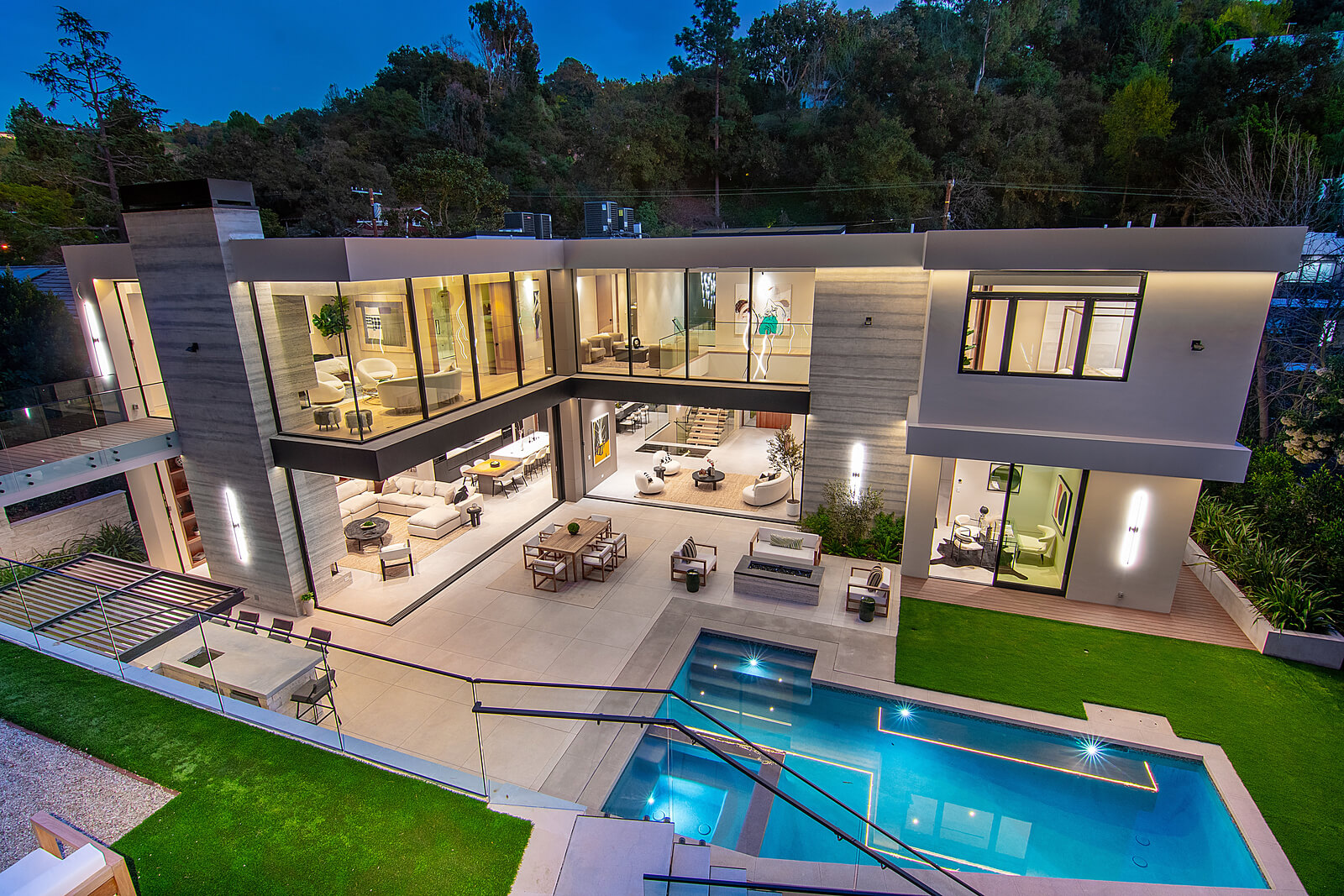
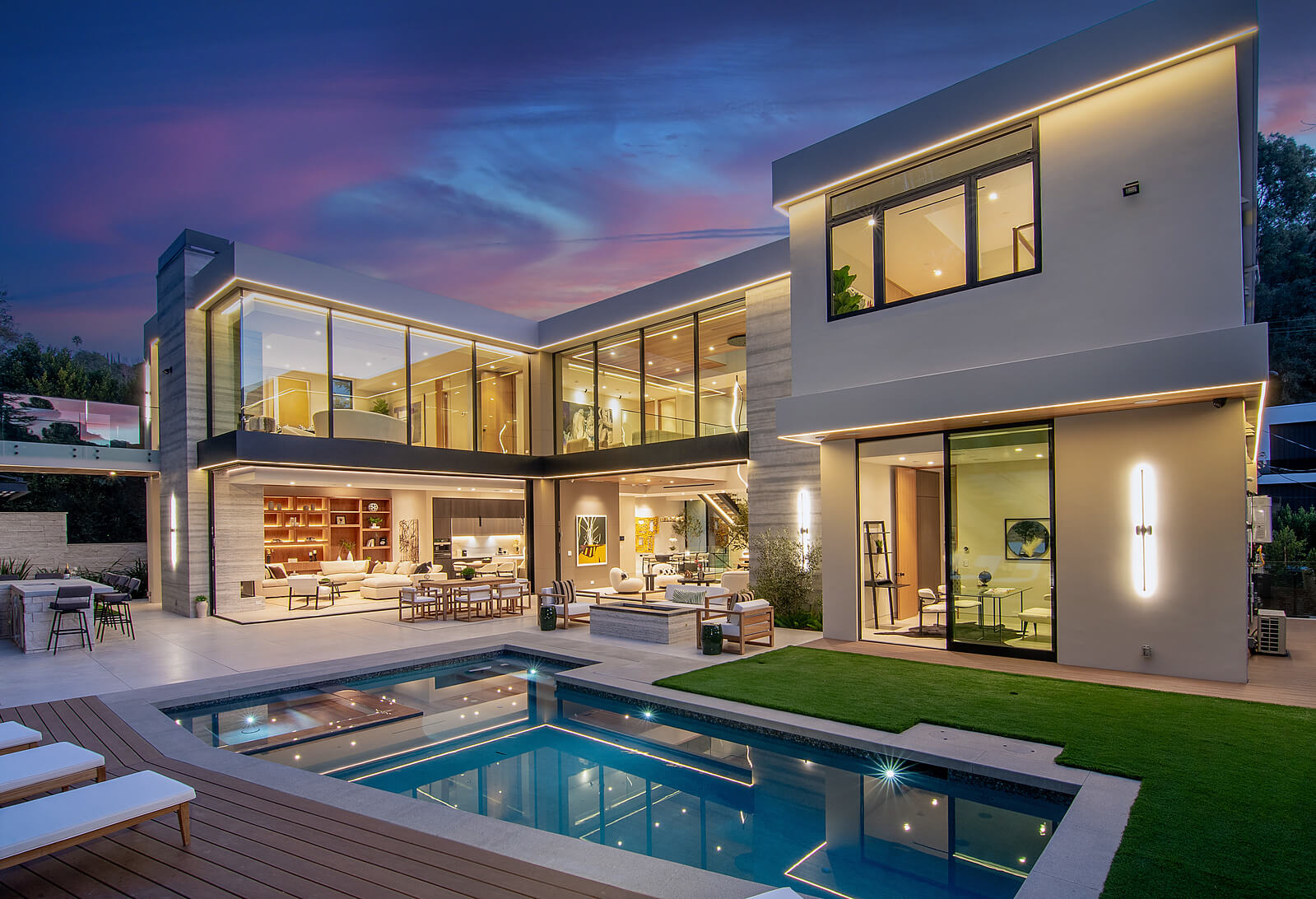
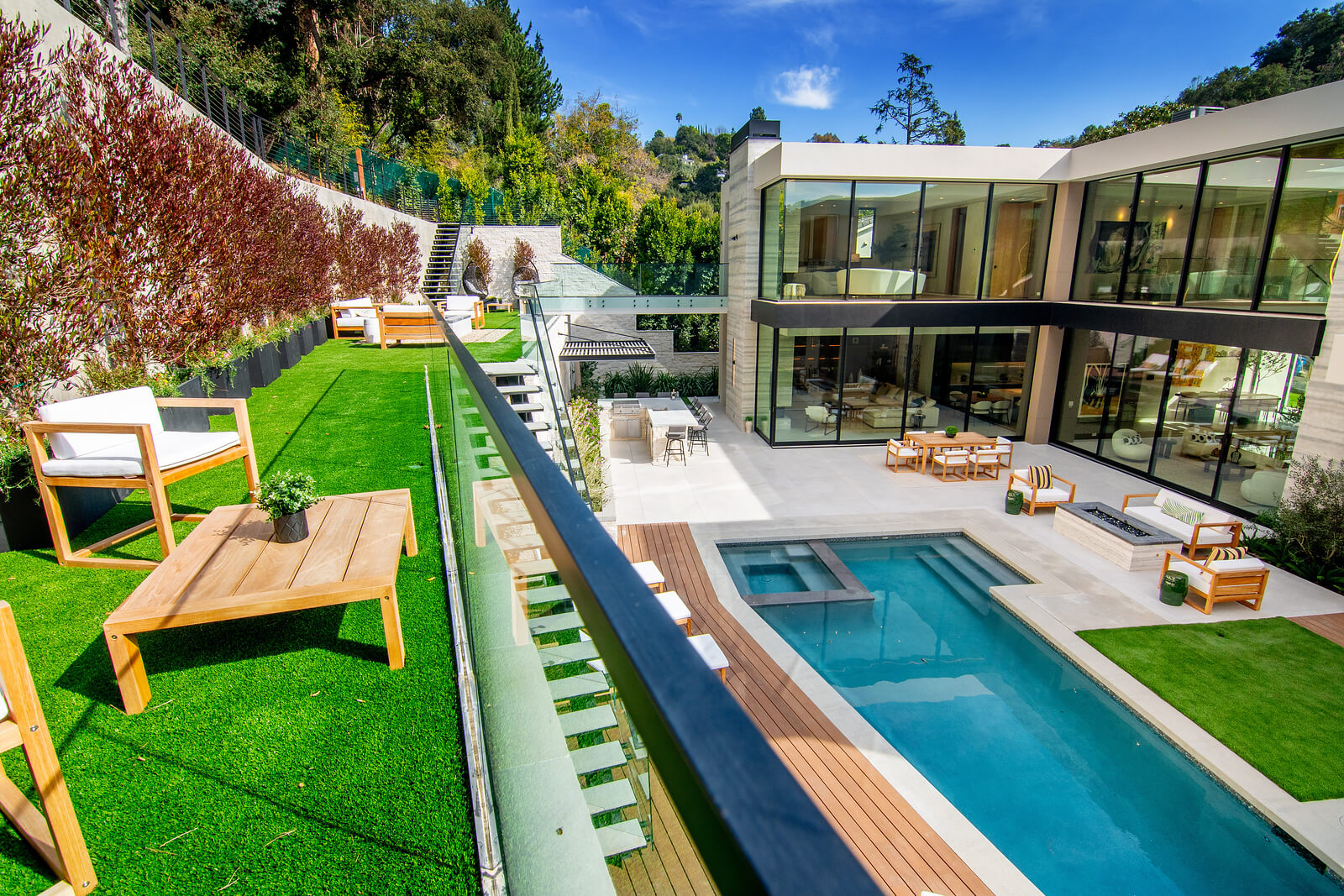
Considering the physical, mental, and emotional needs of people, interior designers use human-centered approaches to address how we live today. Creating novel approaches to promoting health, safety, and welfare, contemporary interiors are increasingly inspired by biophilia as a holistic approach to promoting health, safety, and welfare, contemporary interiors are increasingly inspired by biophilia as a holistic approach to design. By definition, interior design encompasses diverse aspects of our environment. The discipline extends to building materials and finishes; casework, furniture.
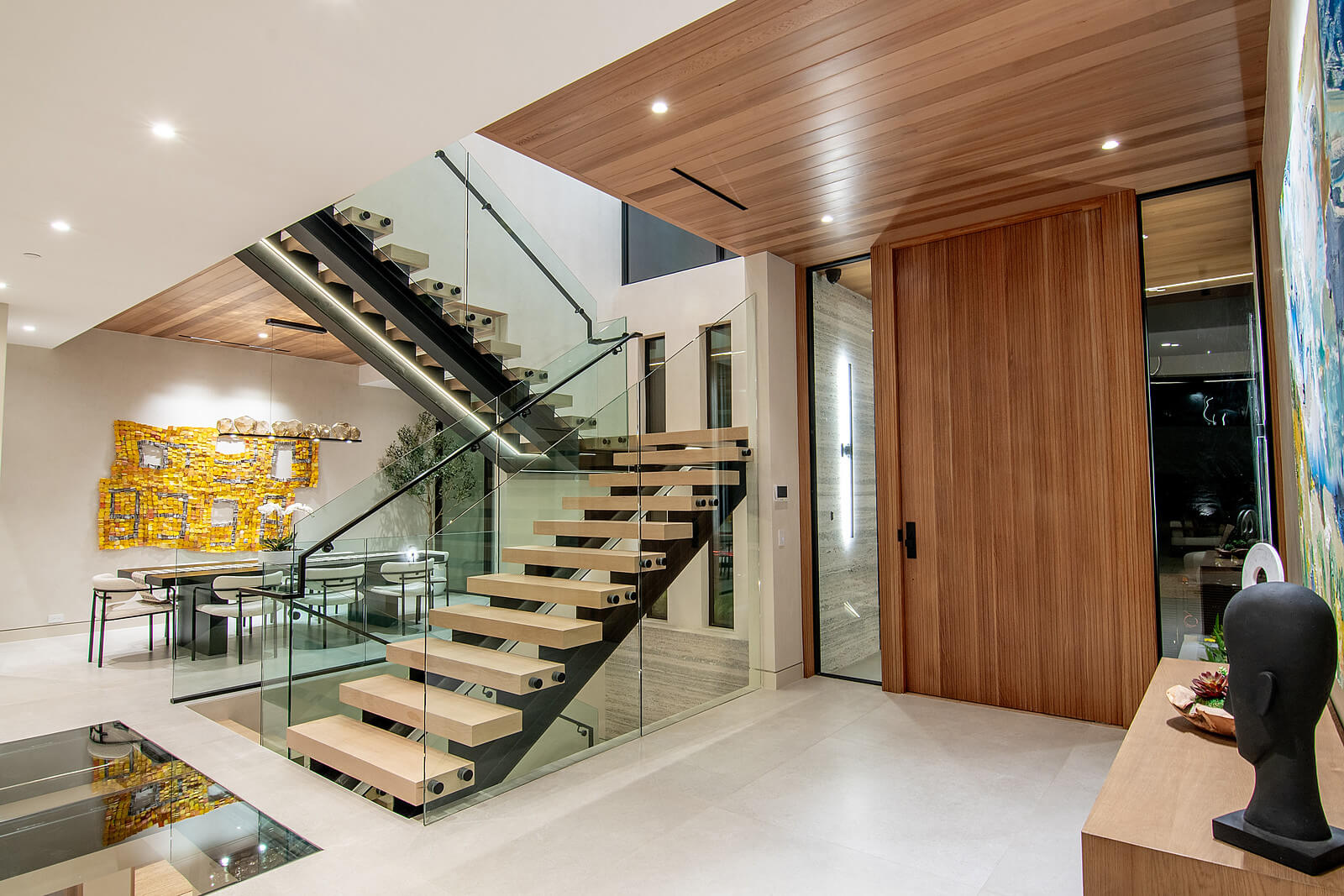
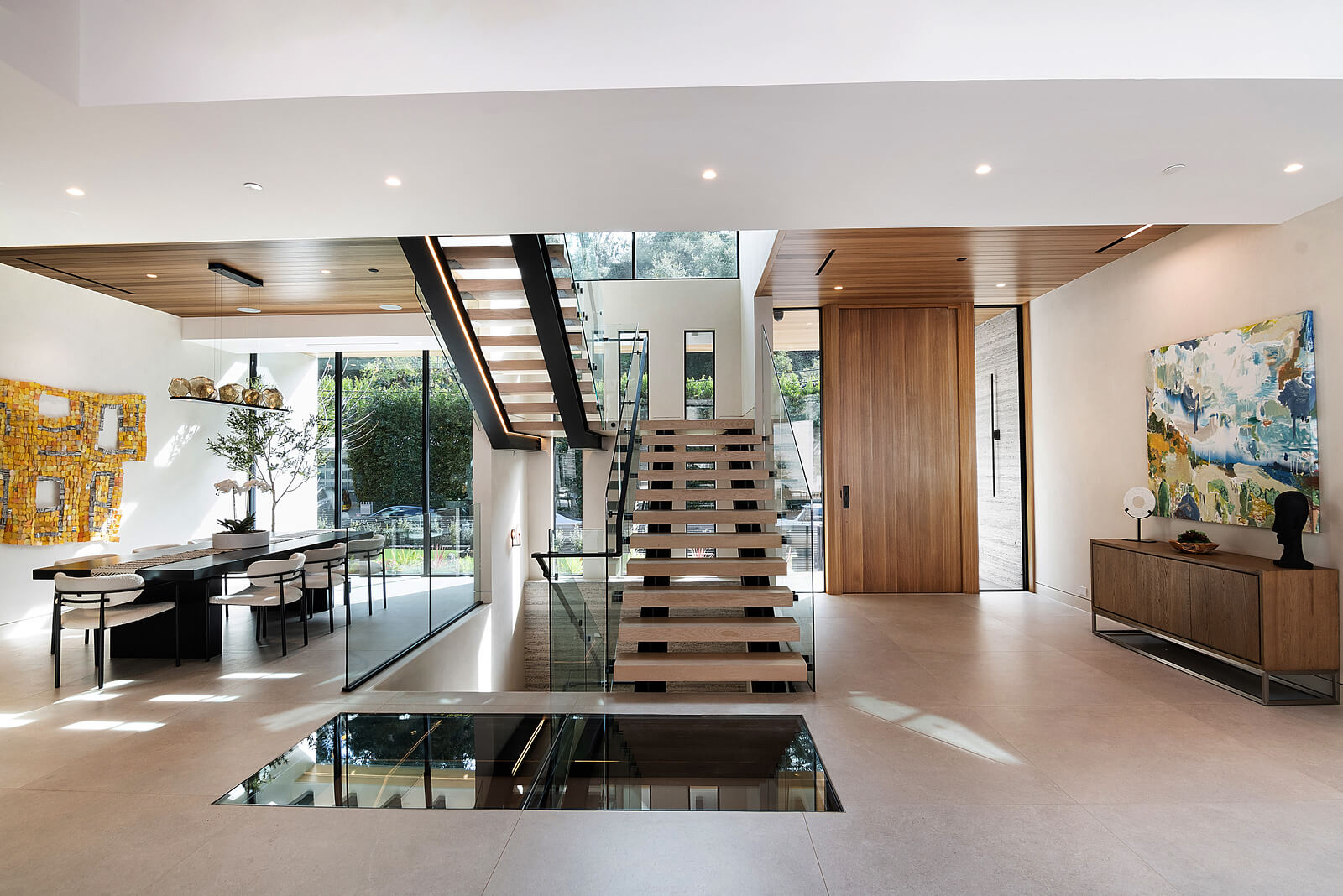
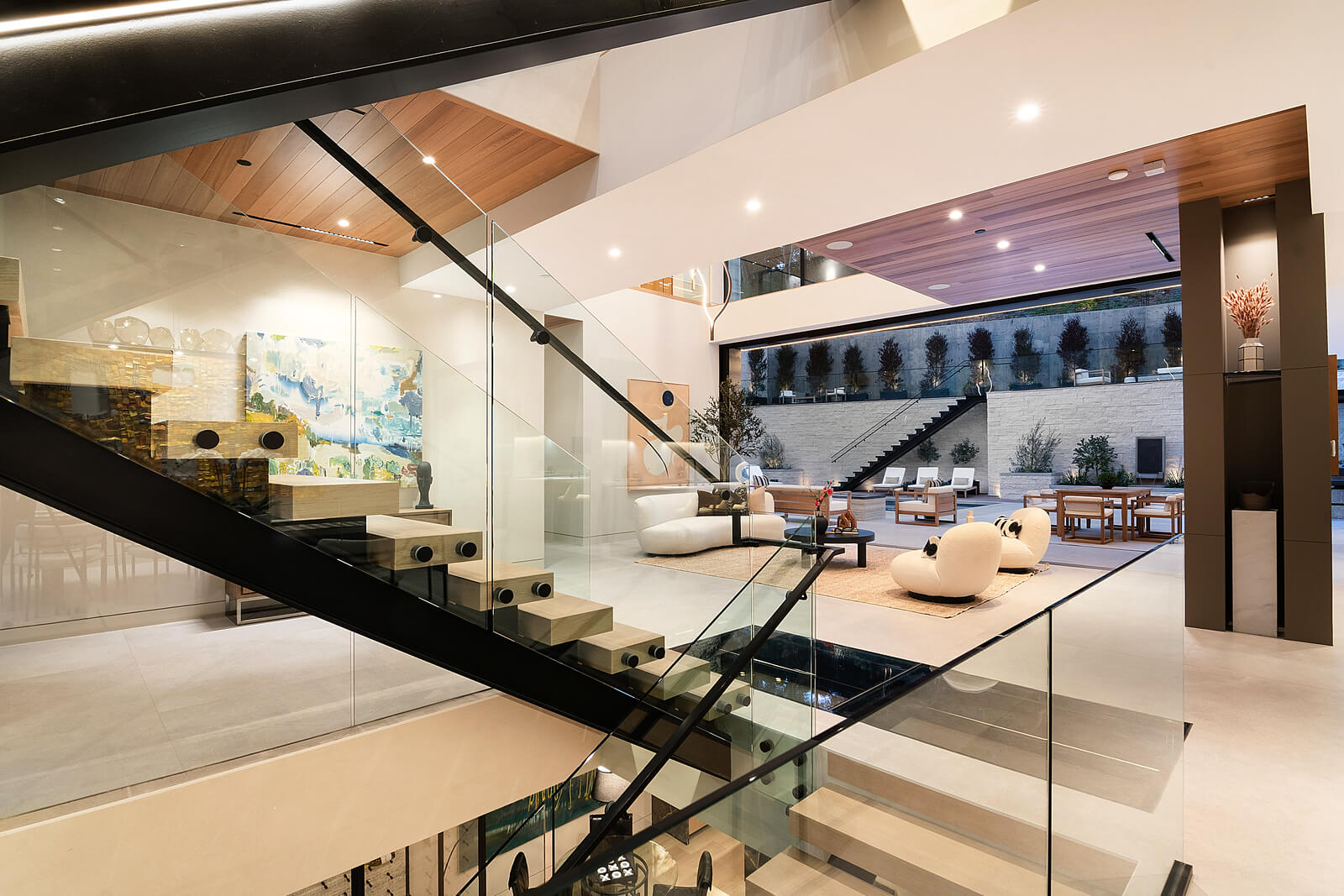
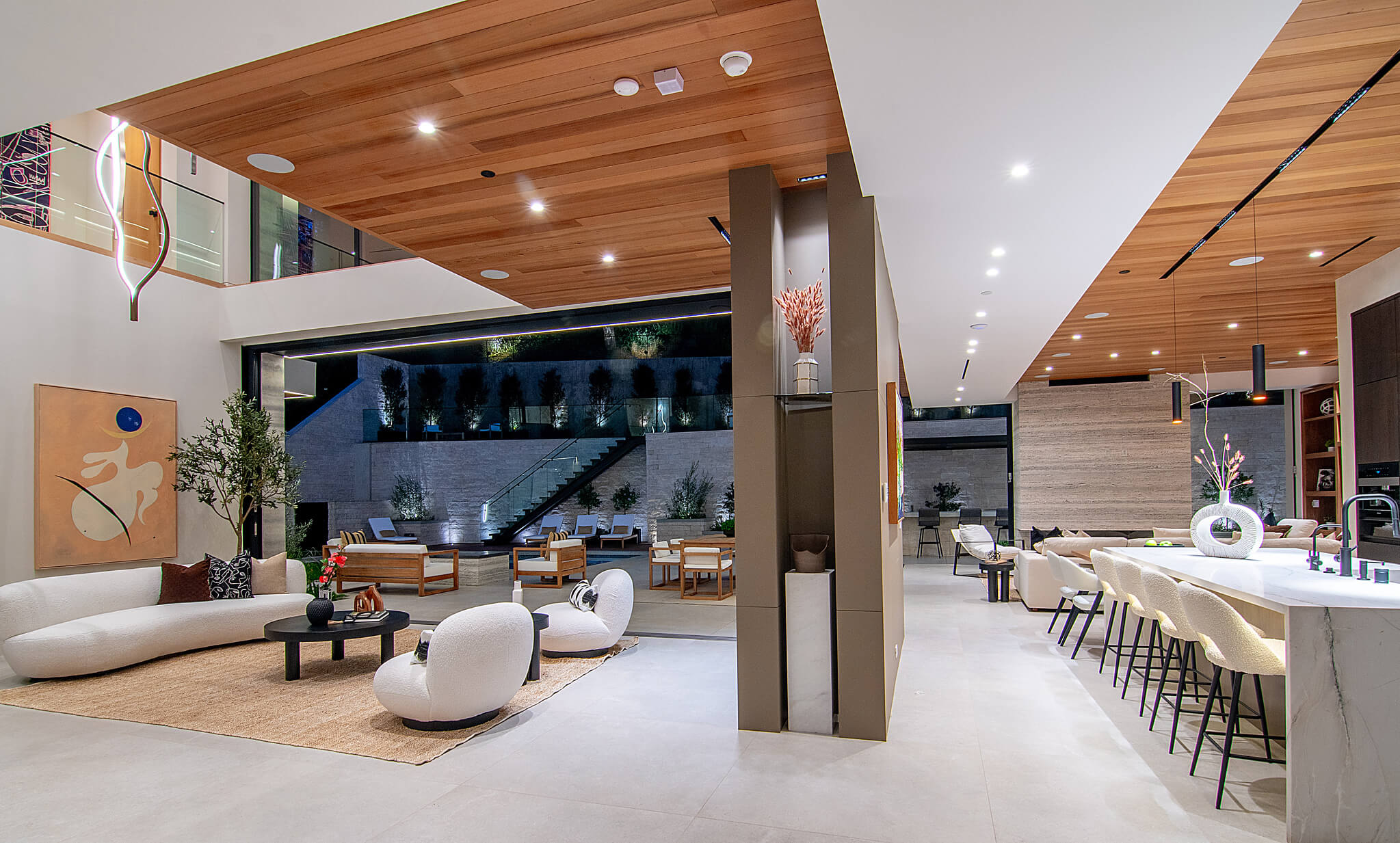
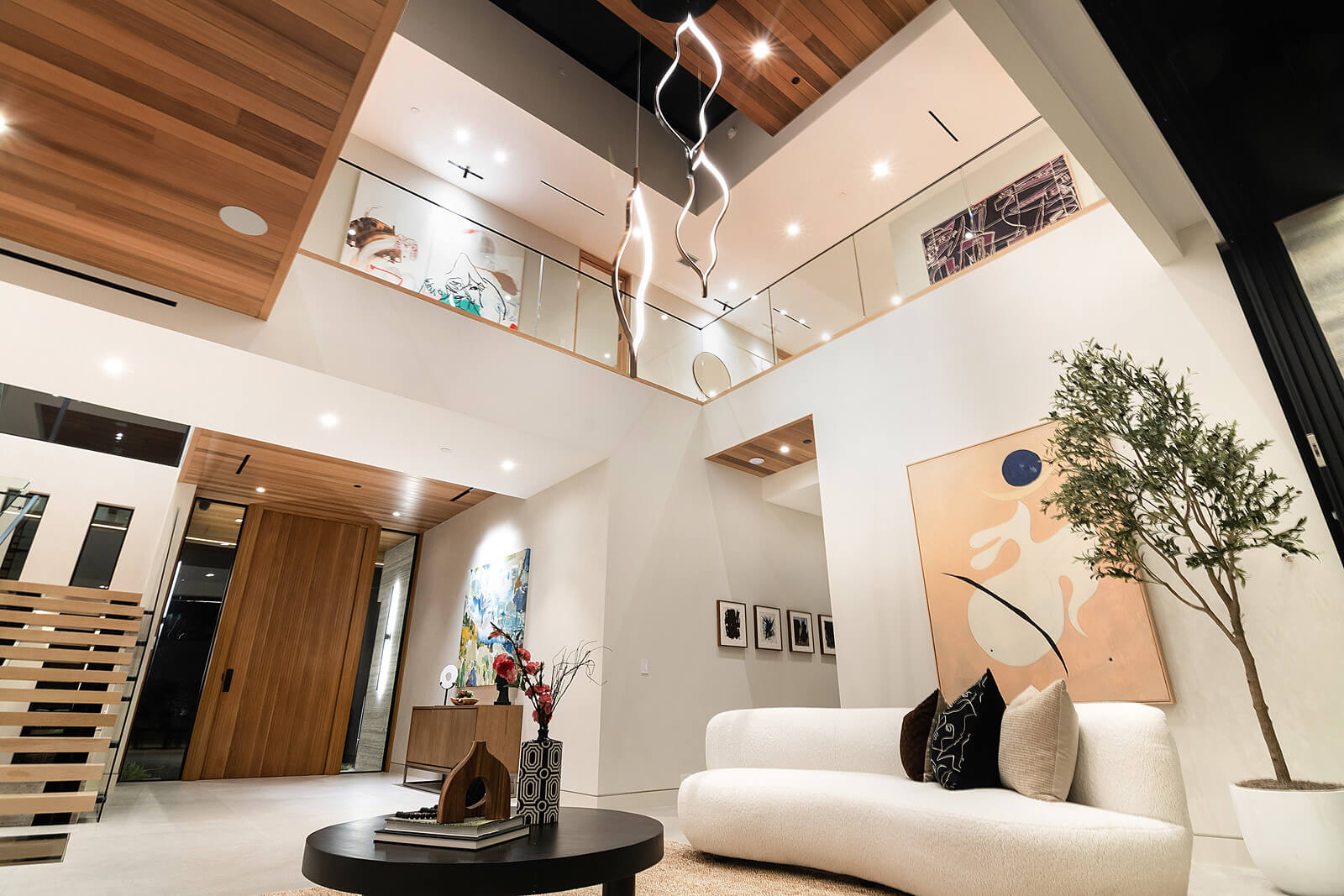
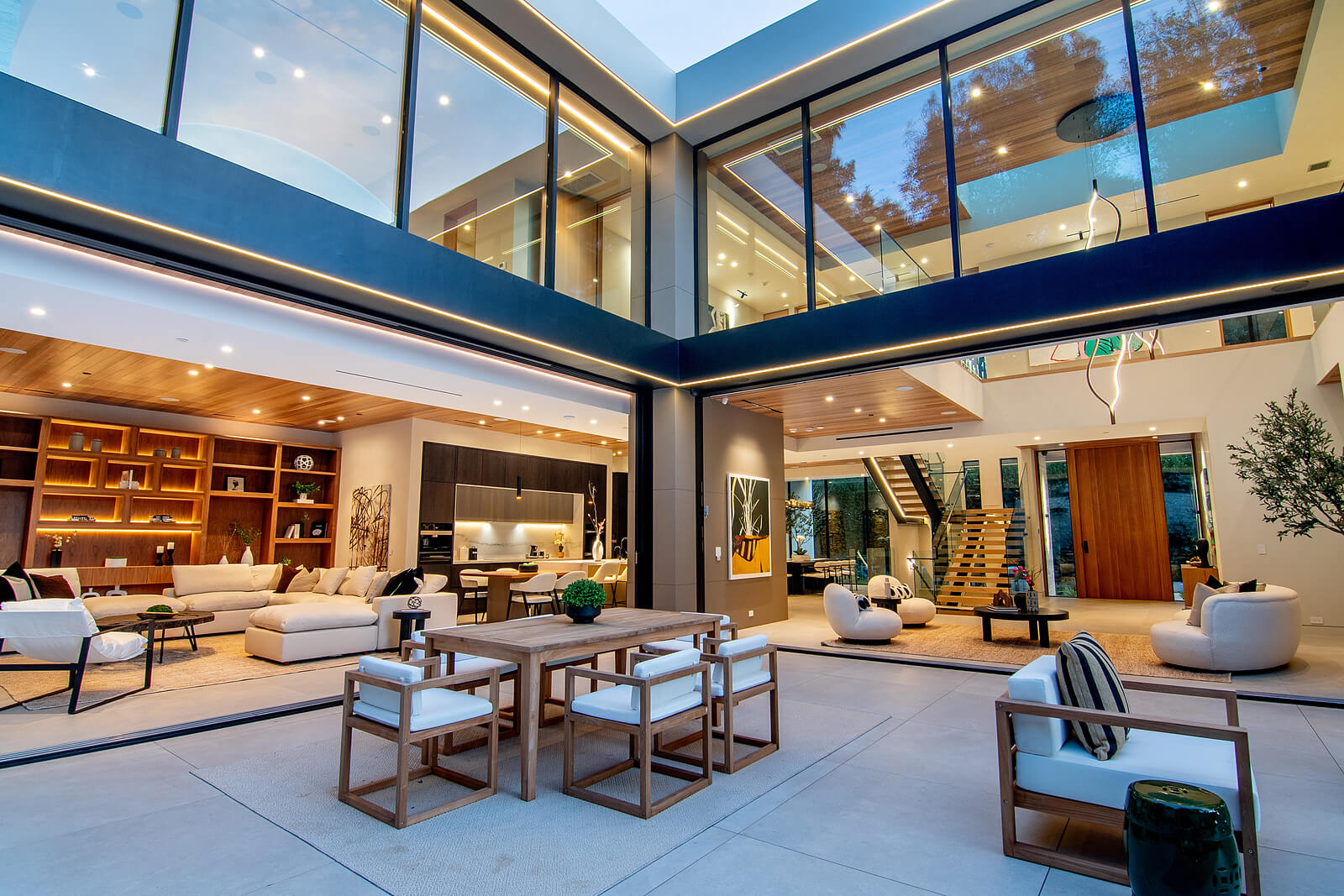
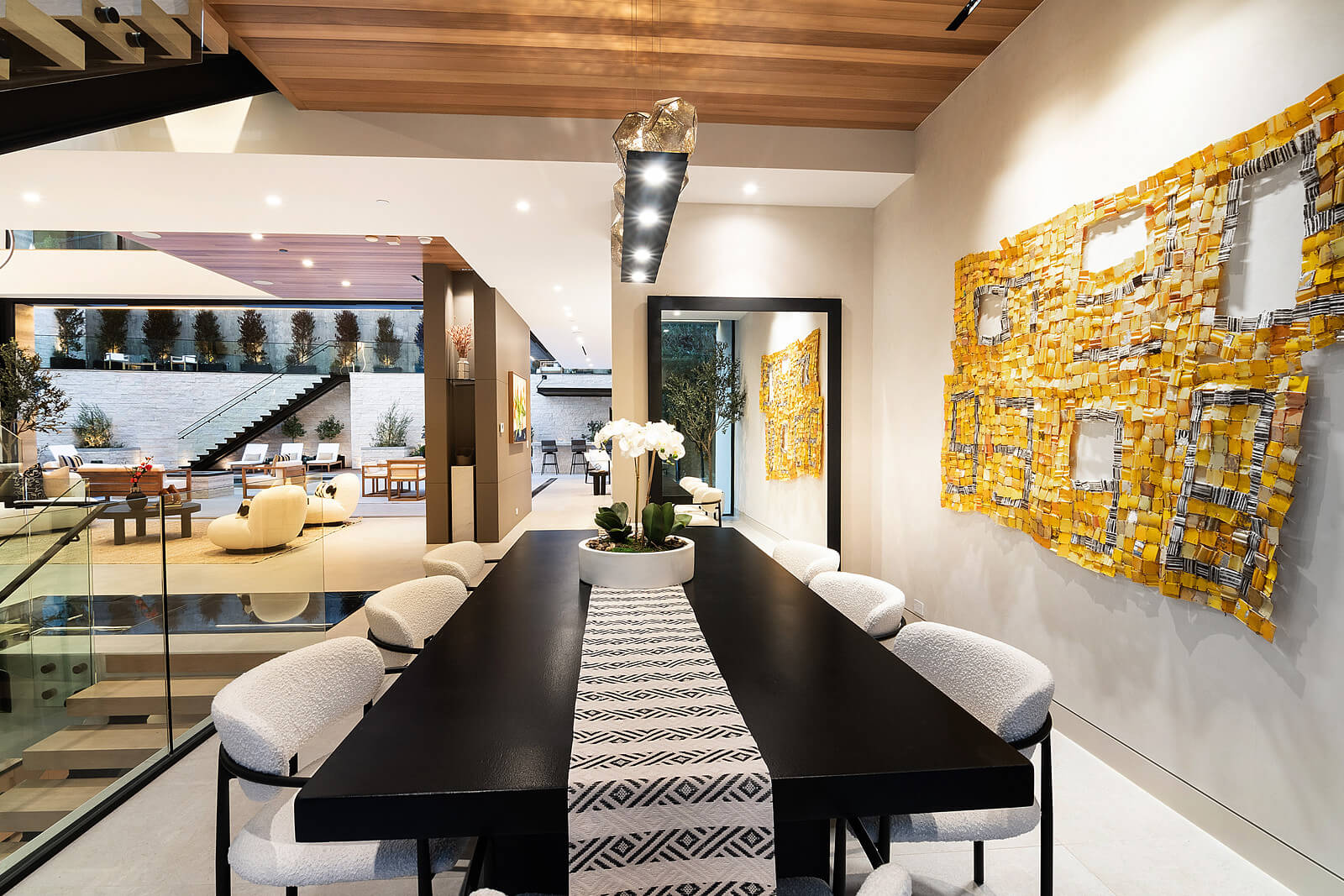
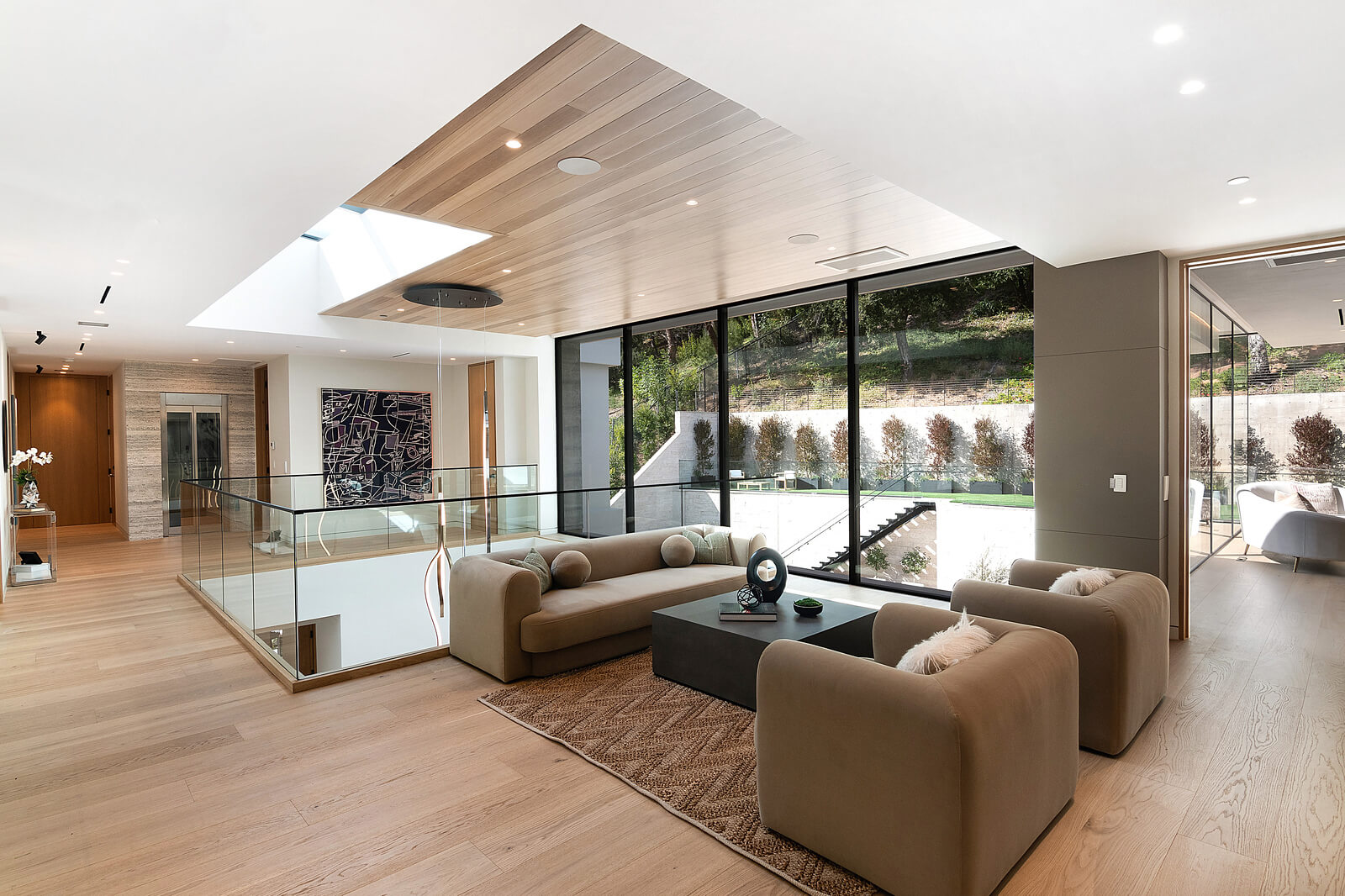
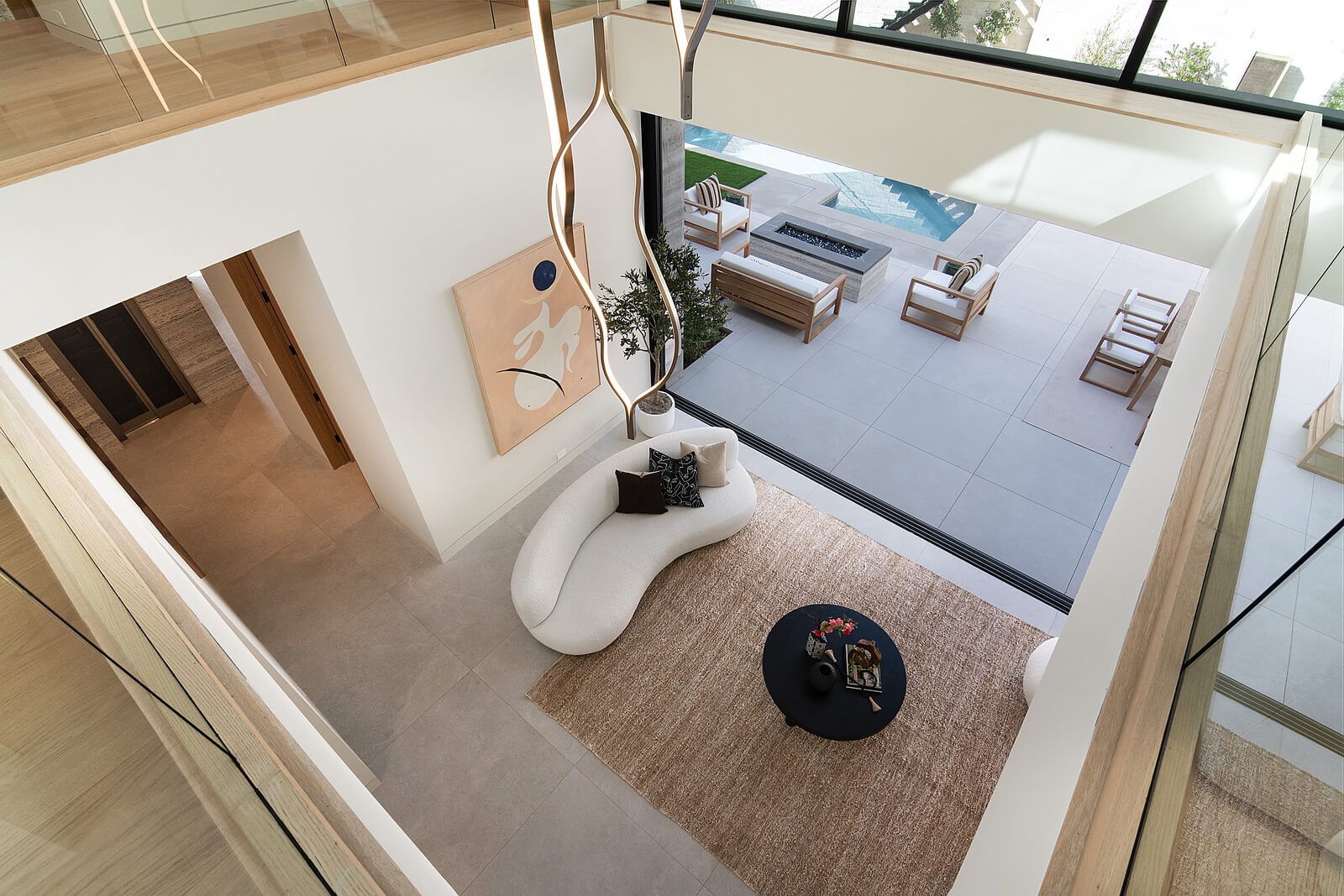
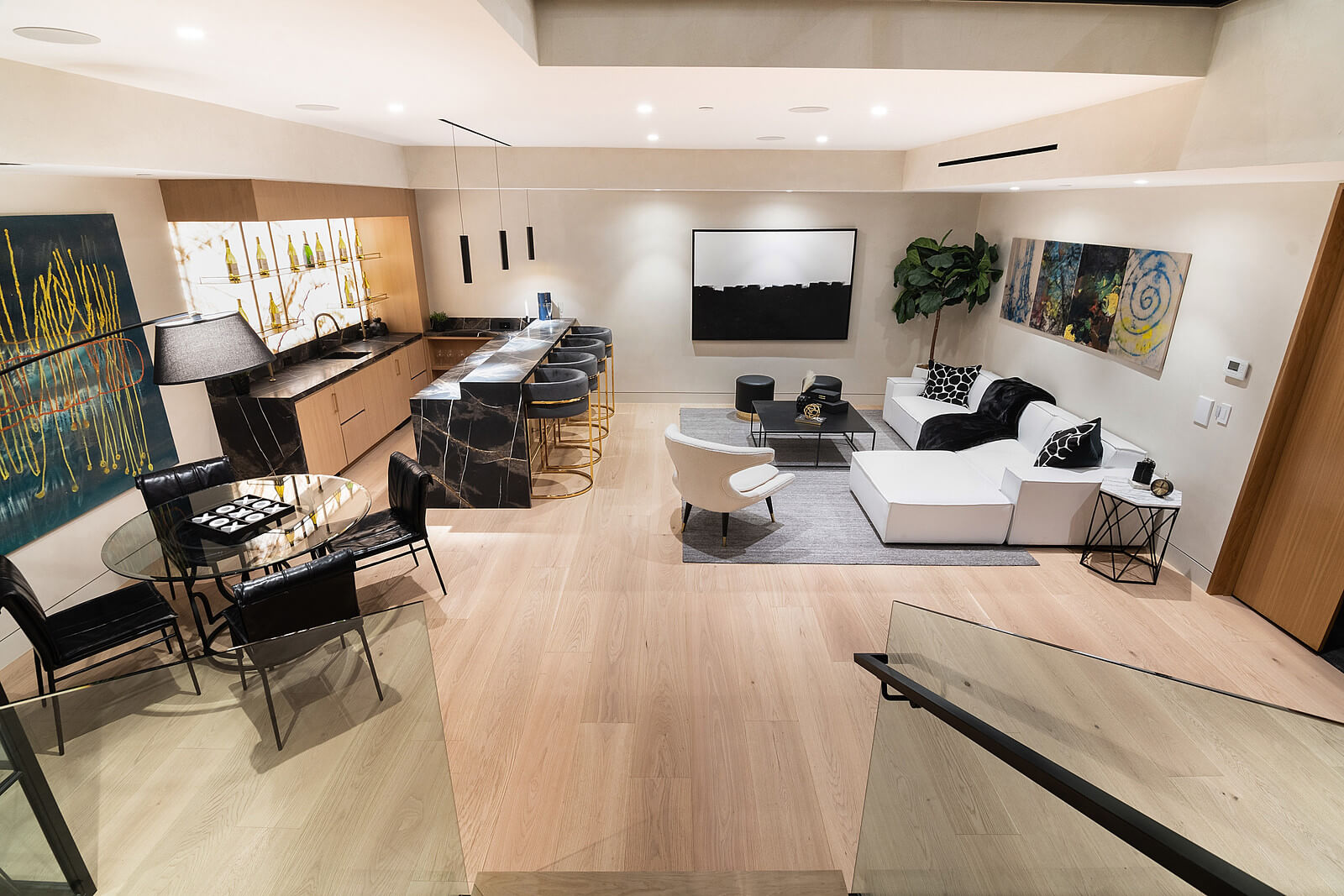
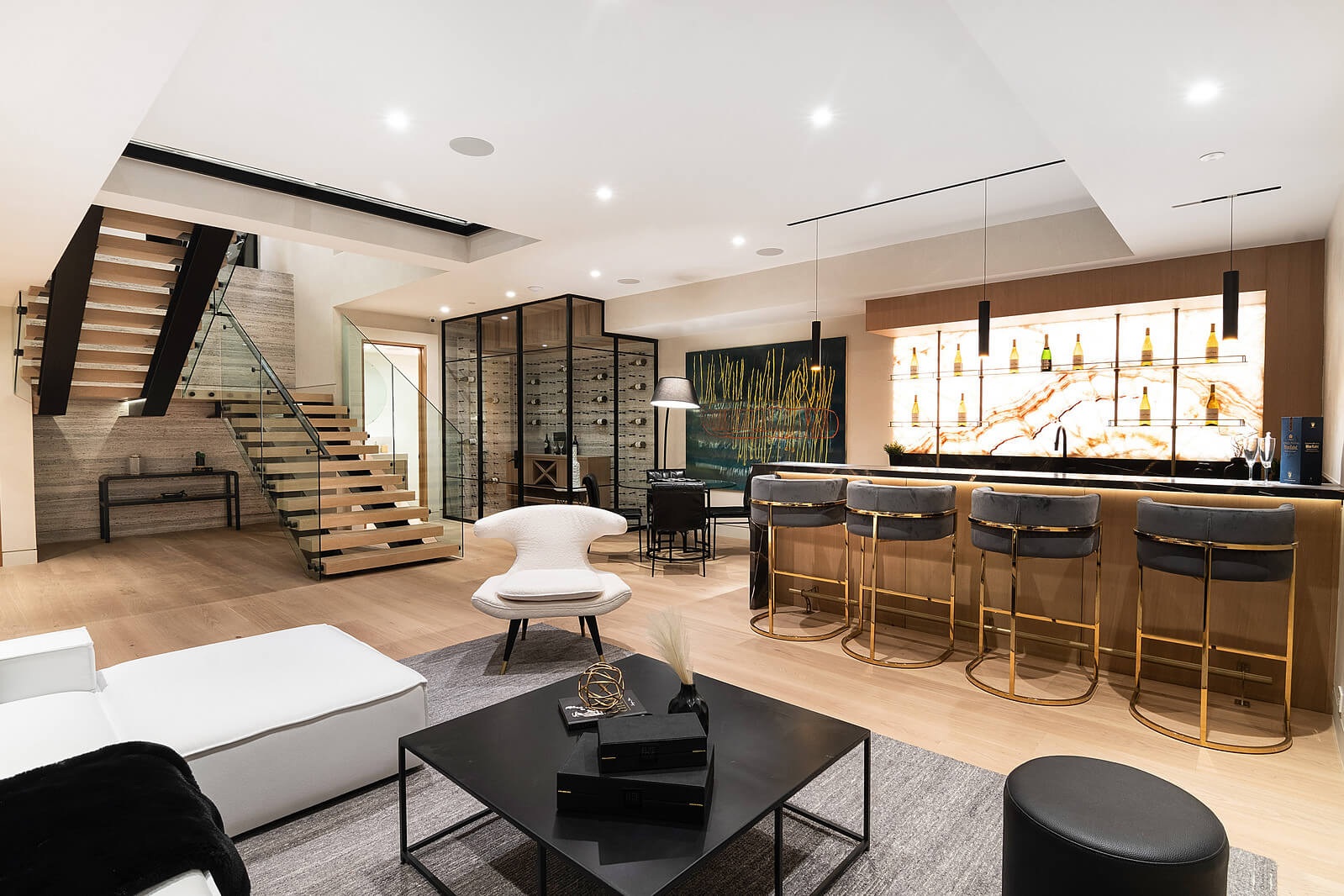
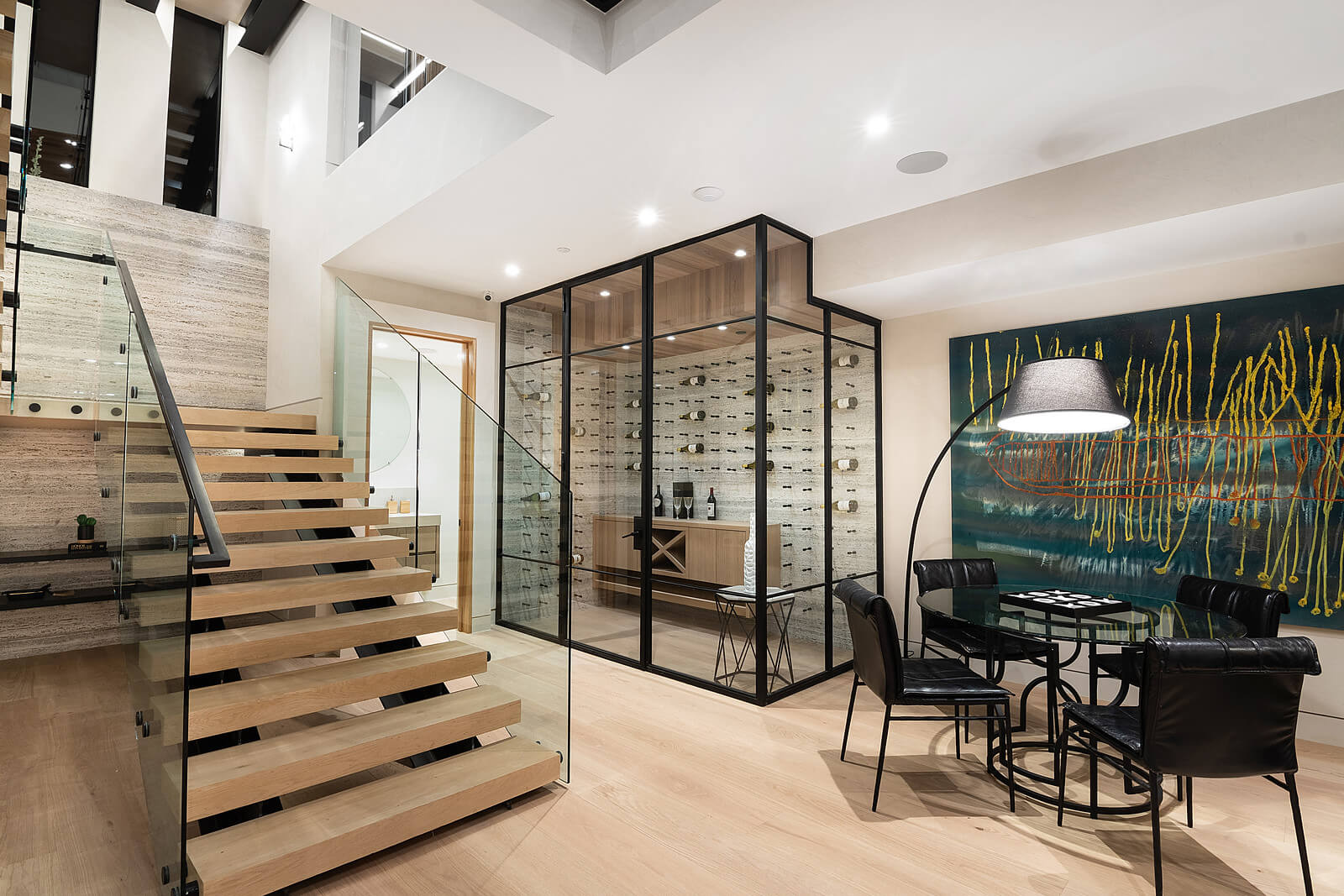
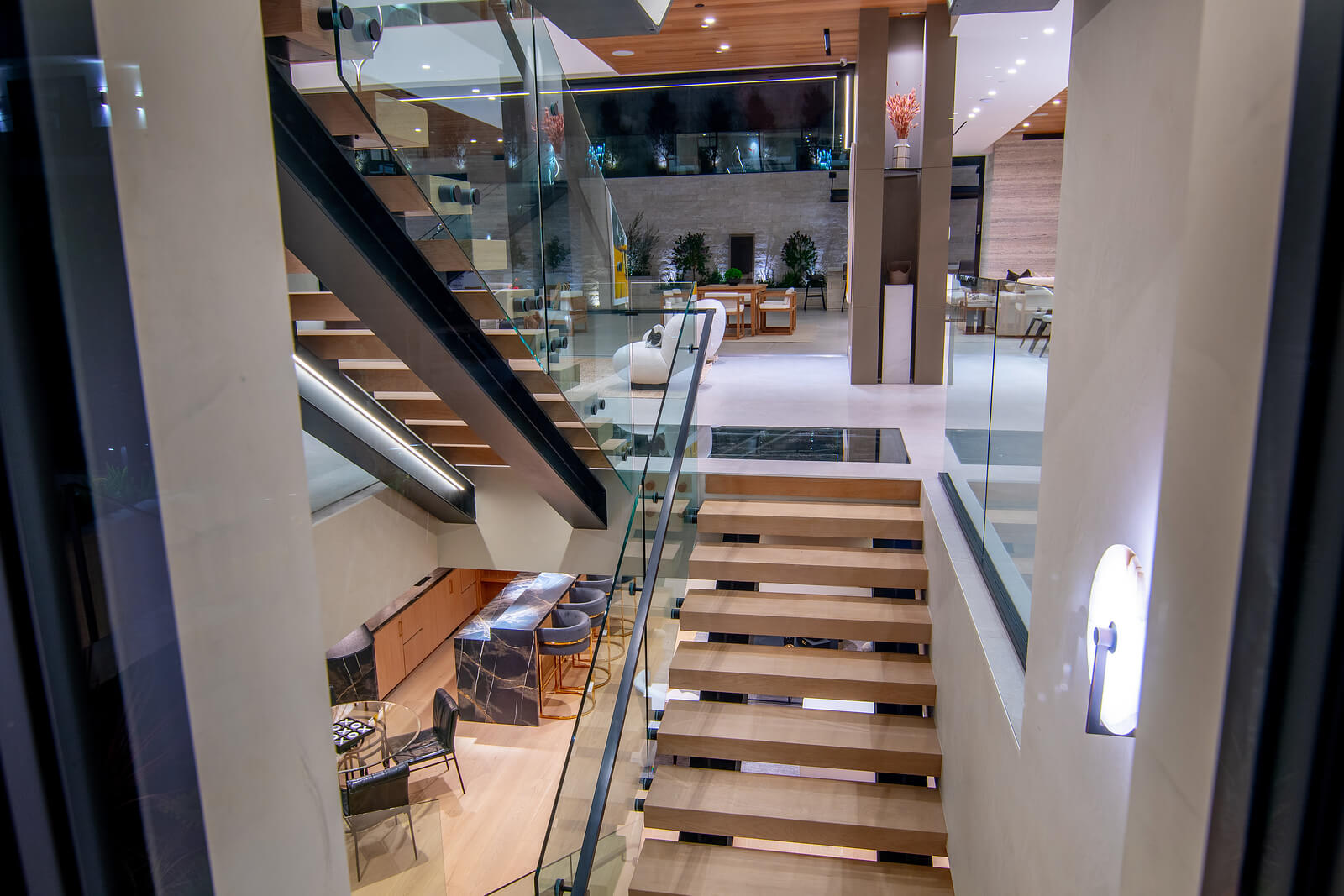
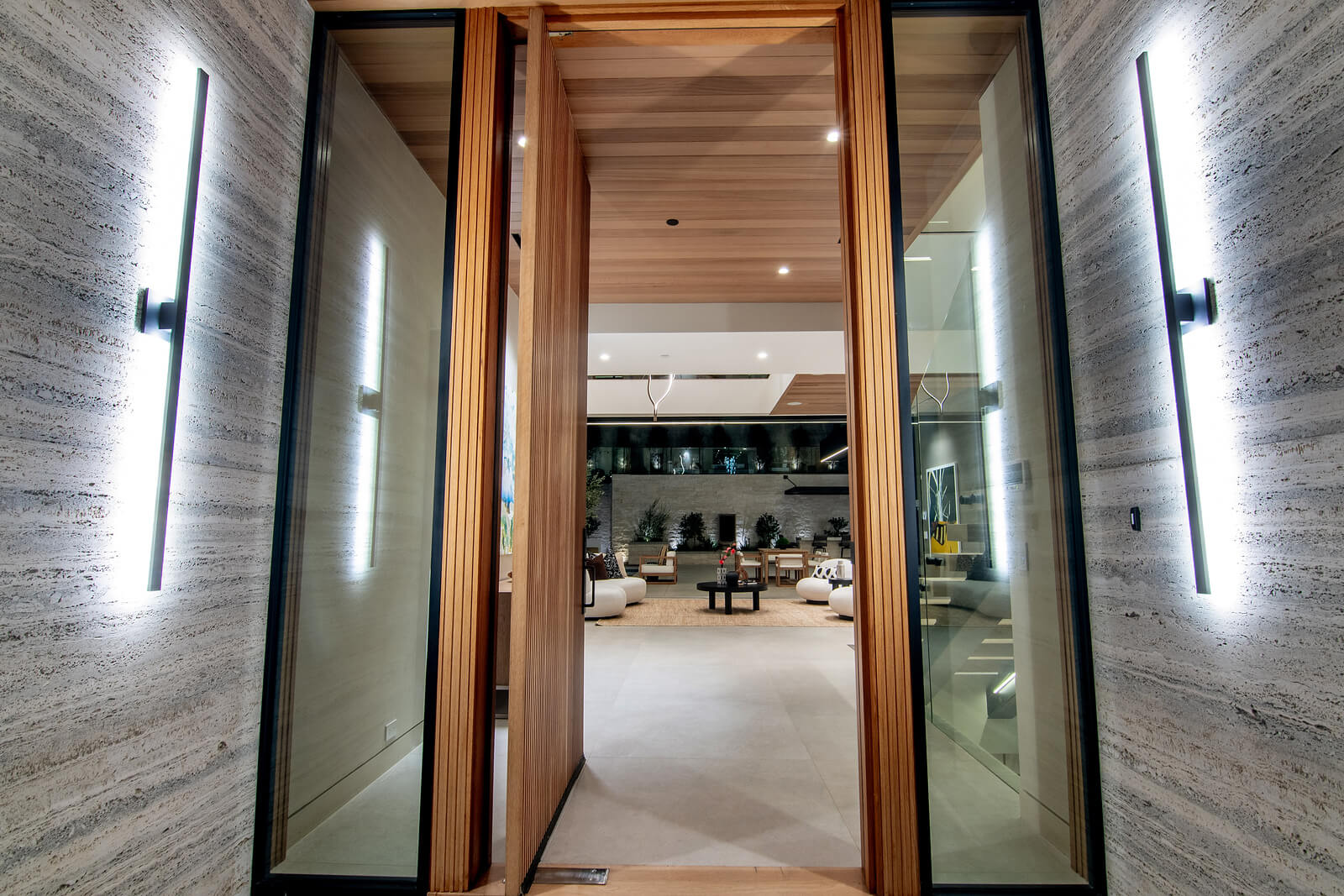
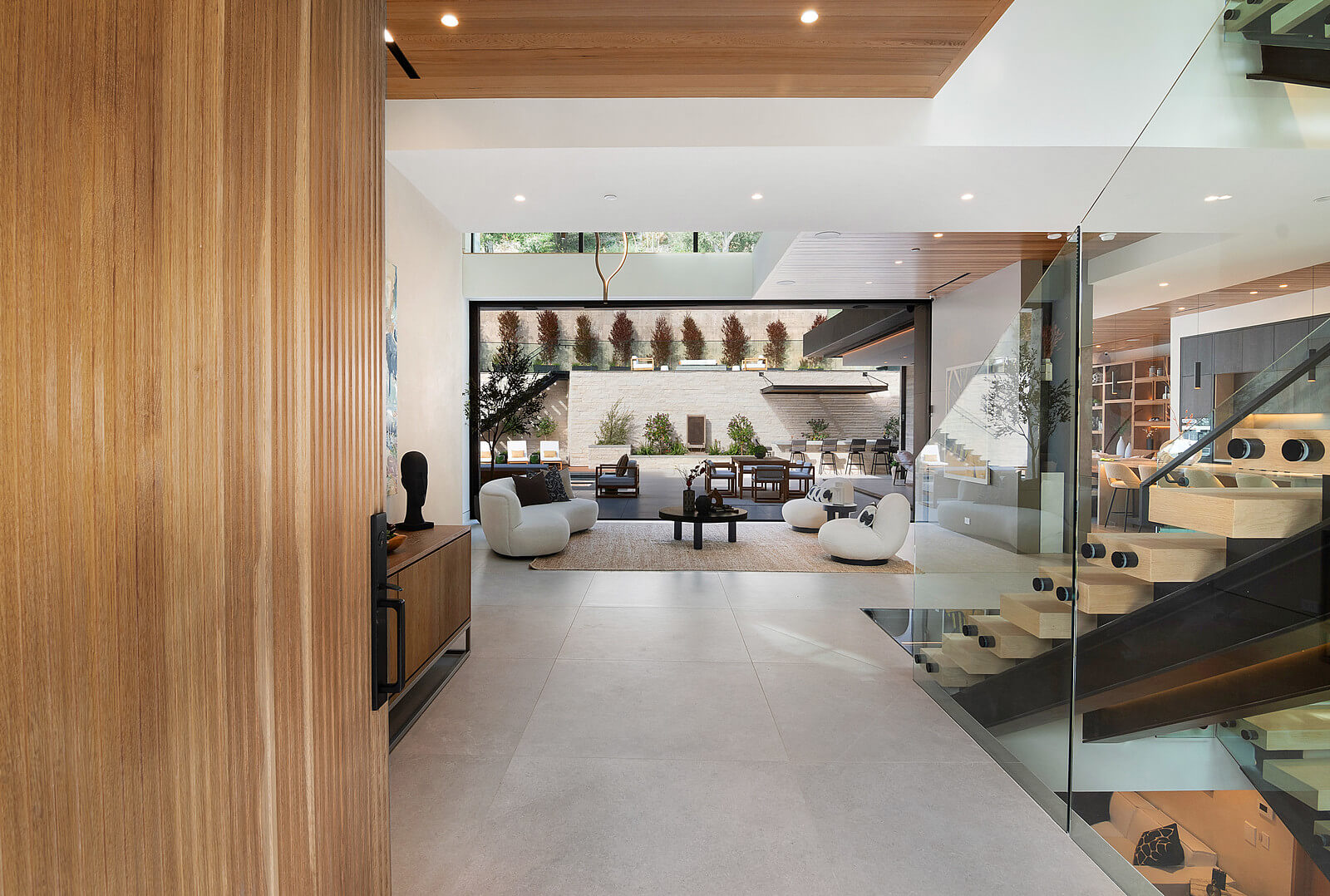
- Open Spatial Flow: A central staircase and double-height spaces connect living areas for visual continuity and fluid movement.
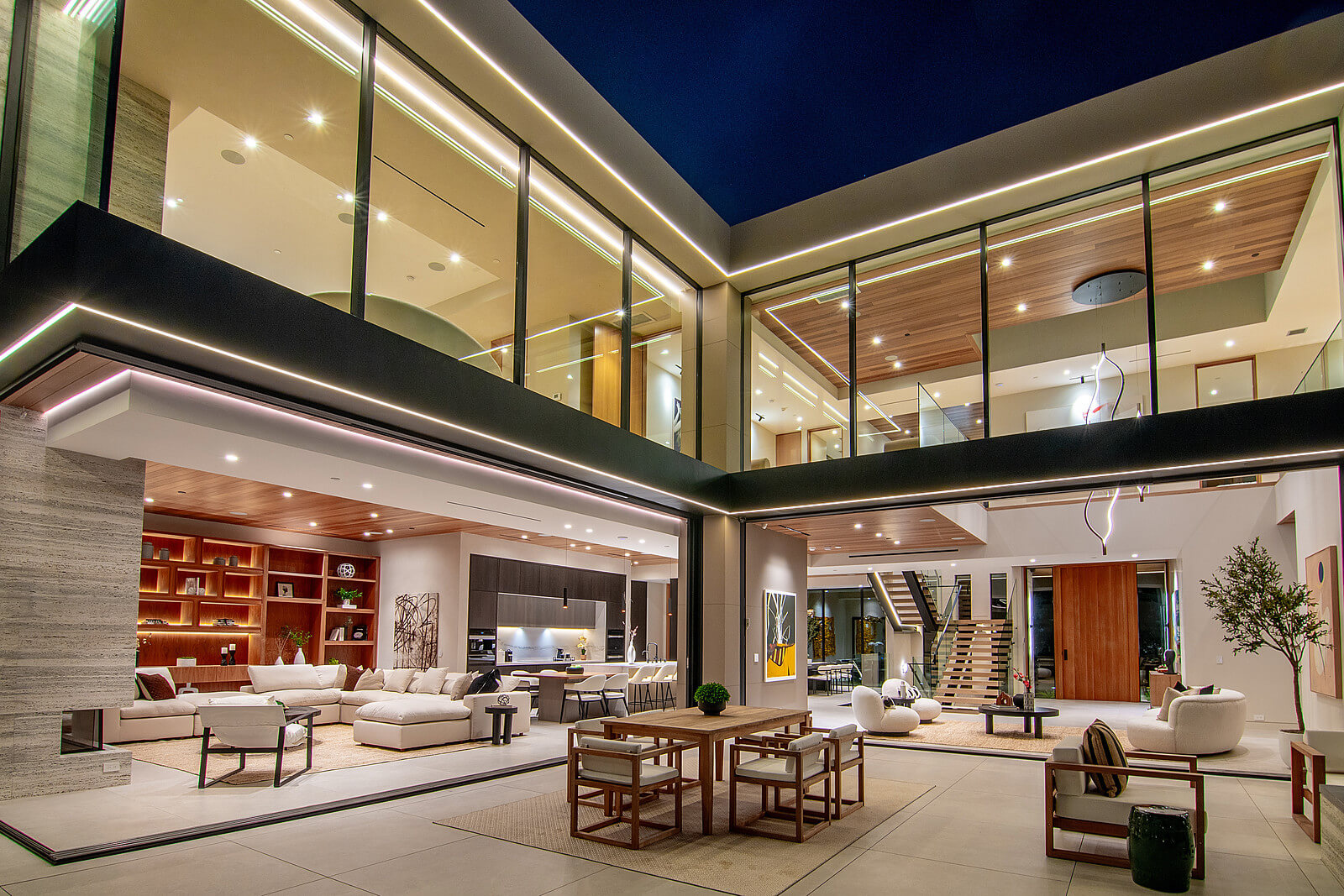
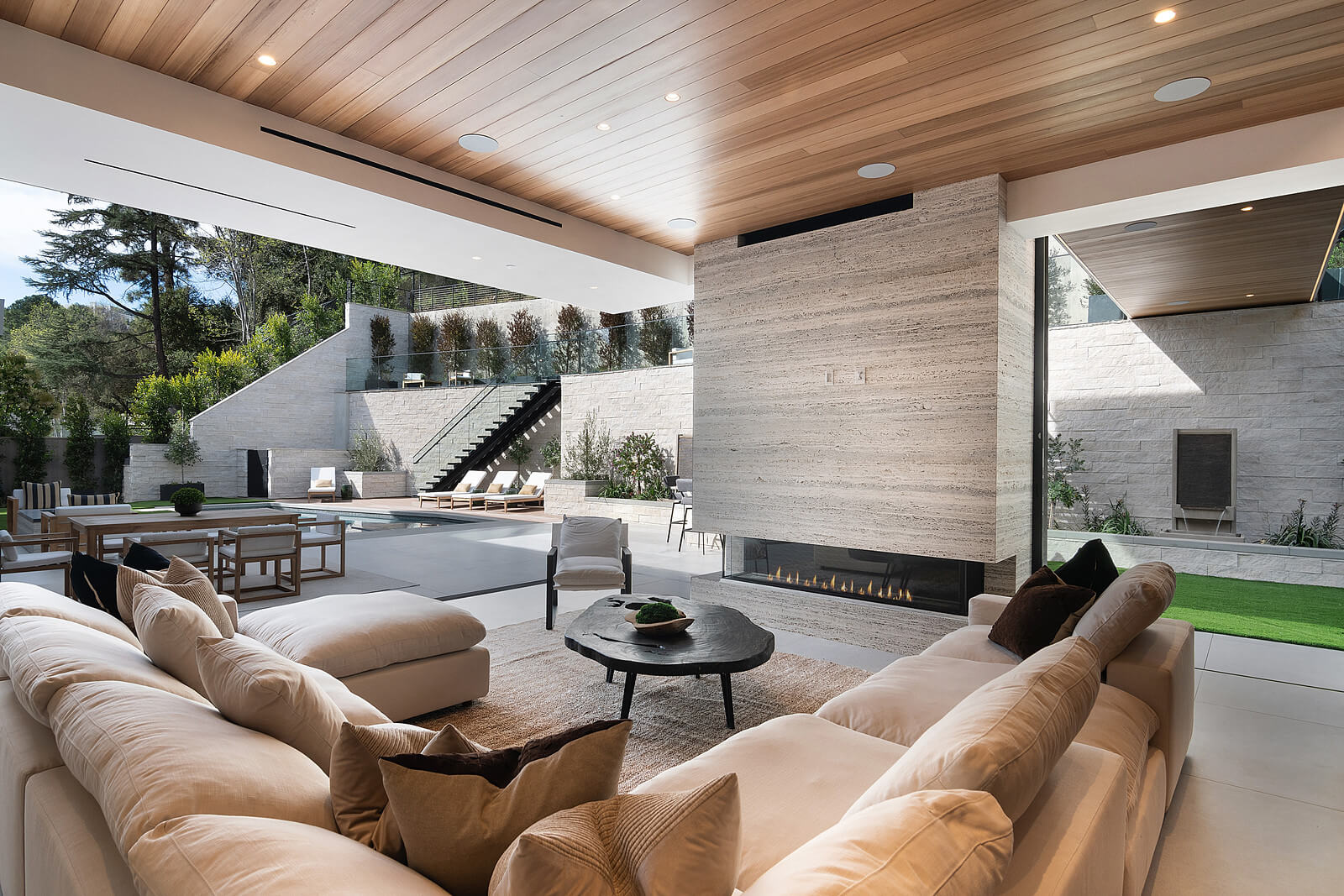
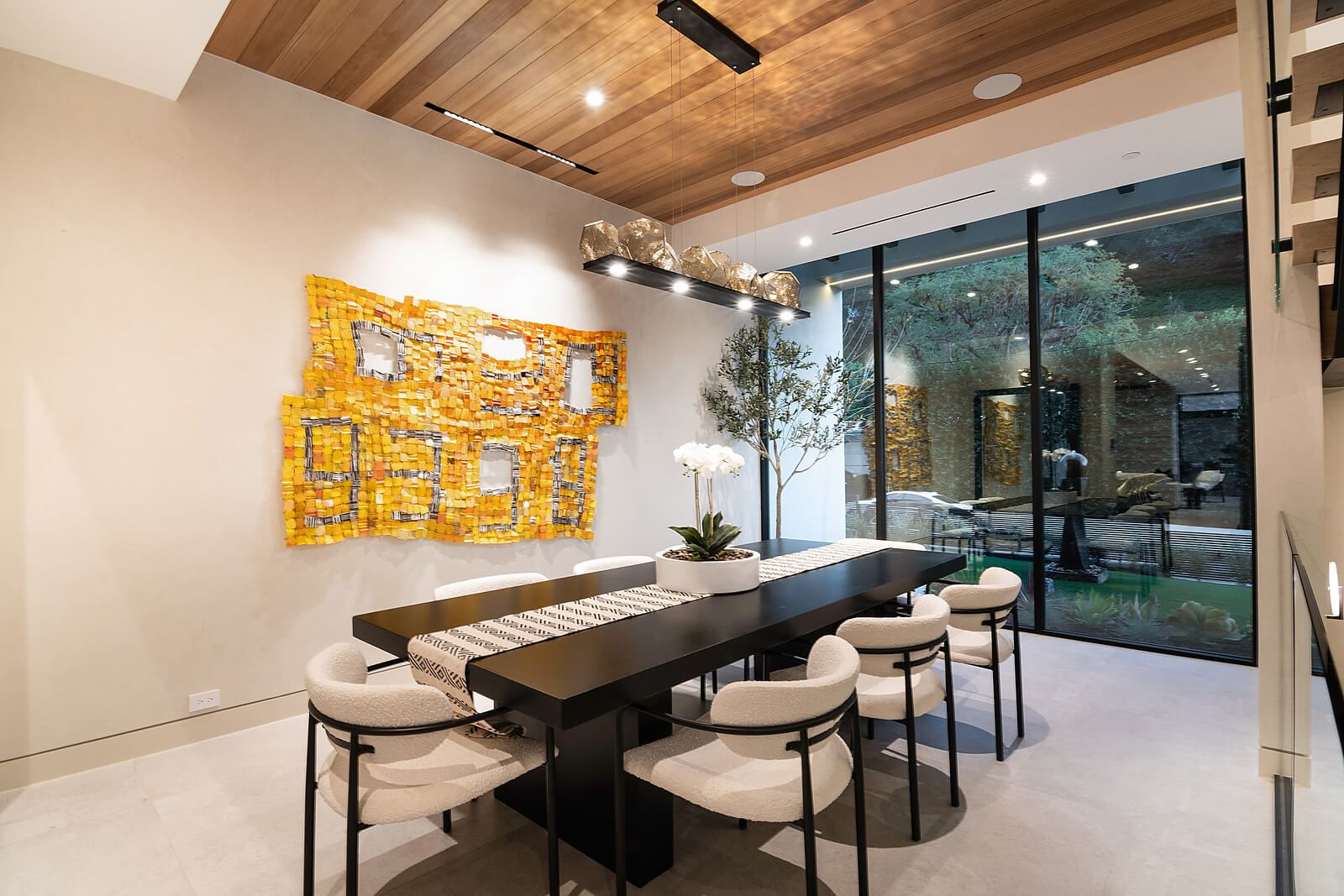
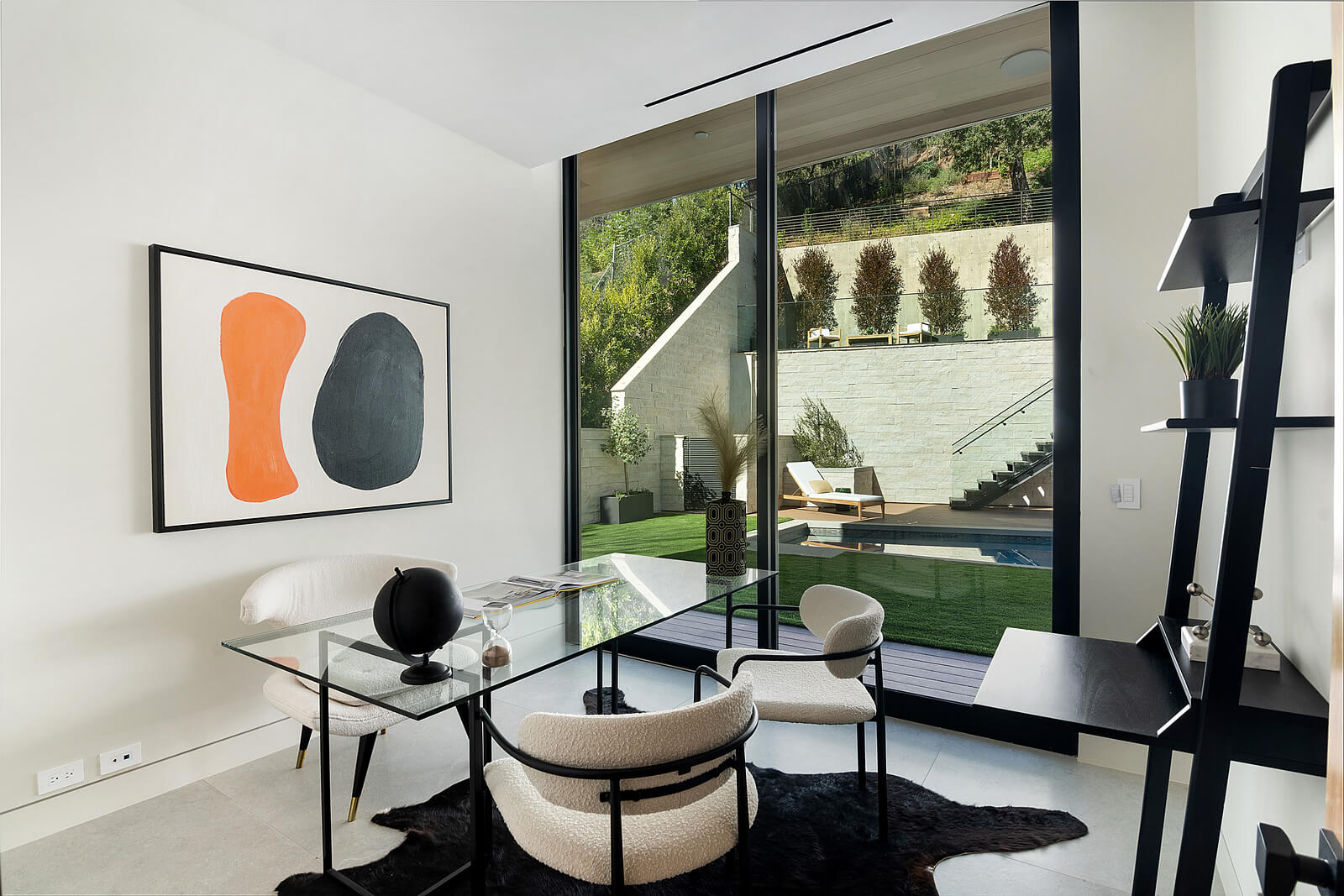
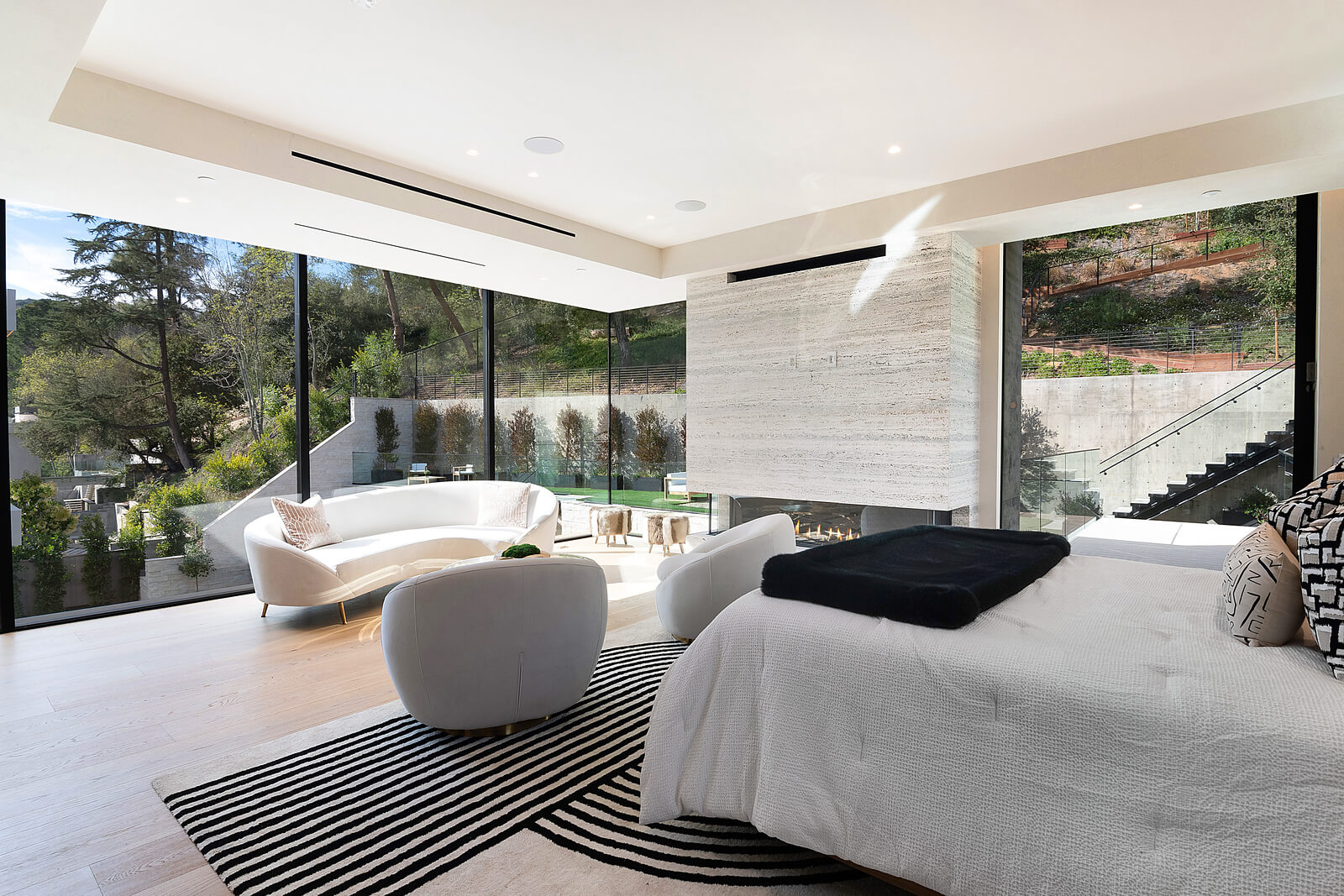
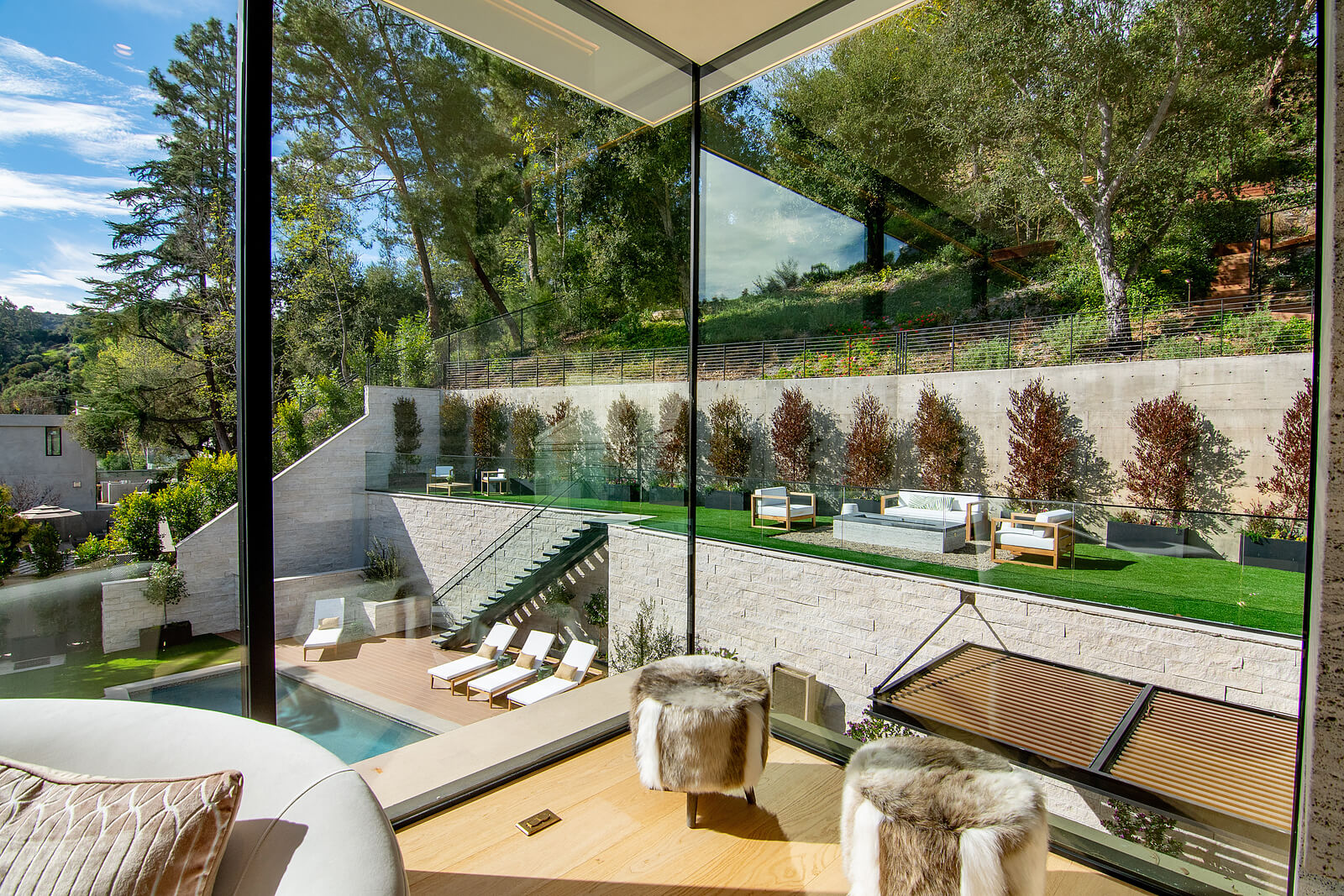
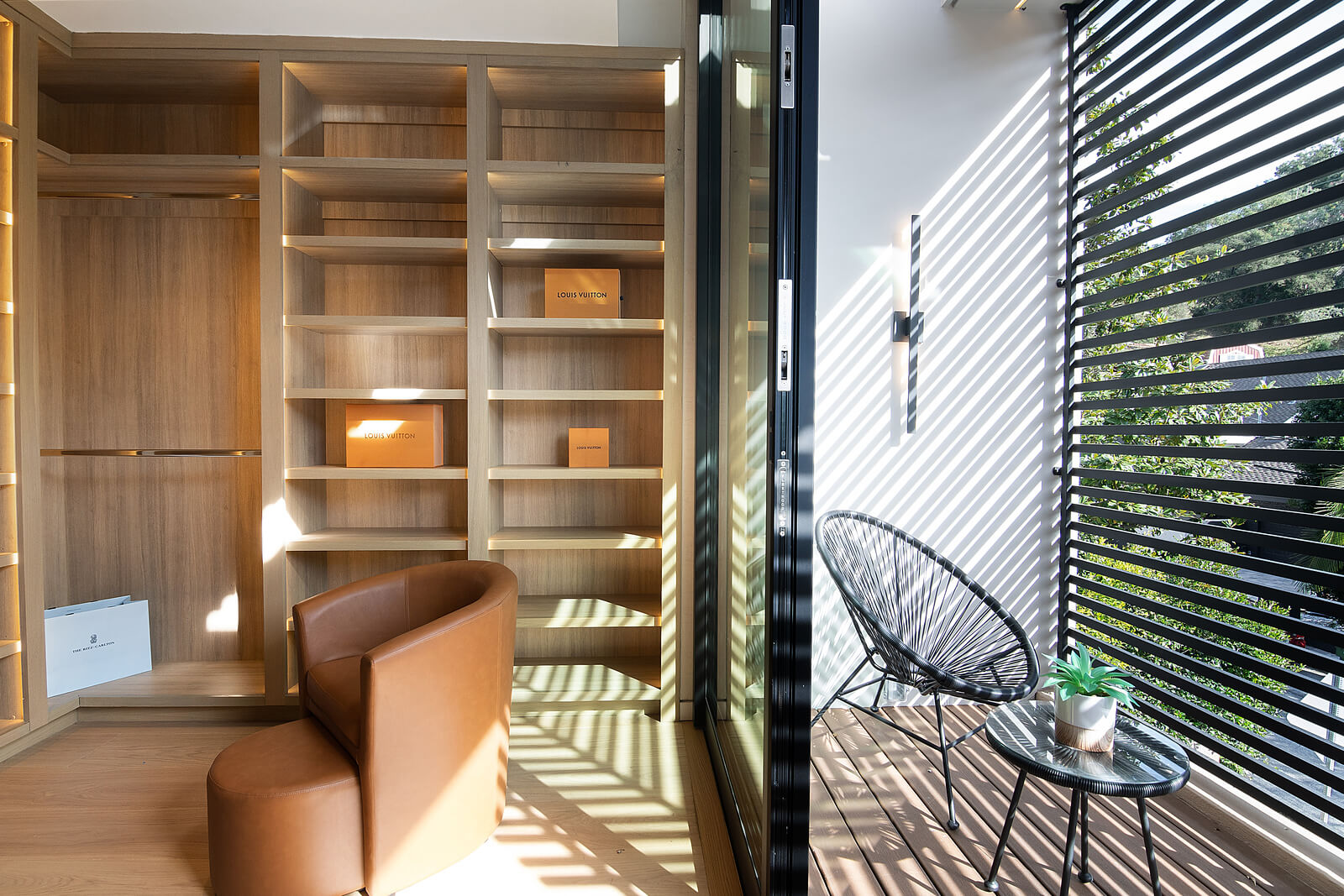
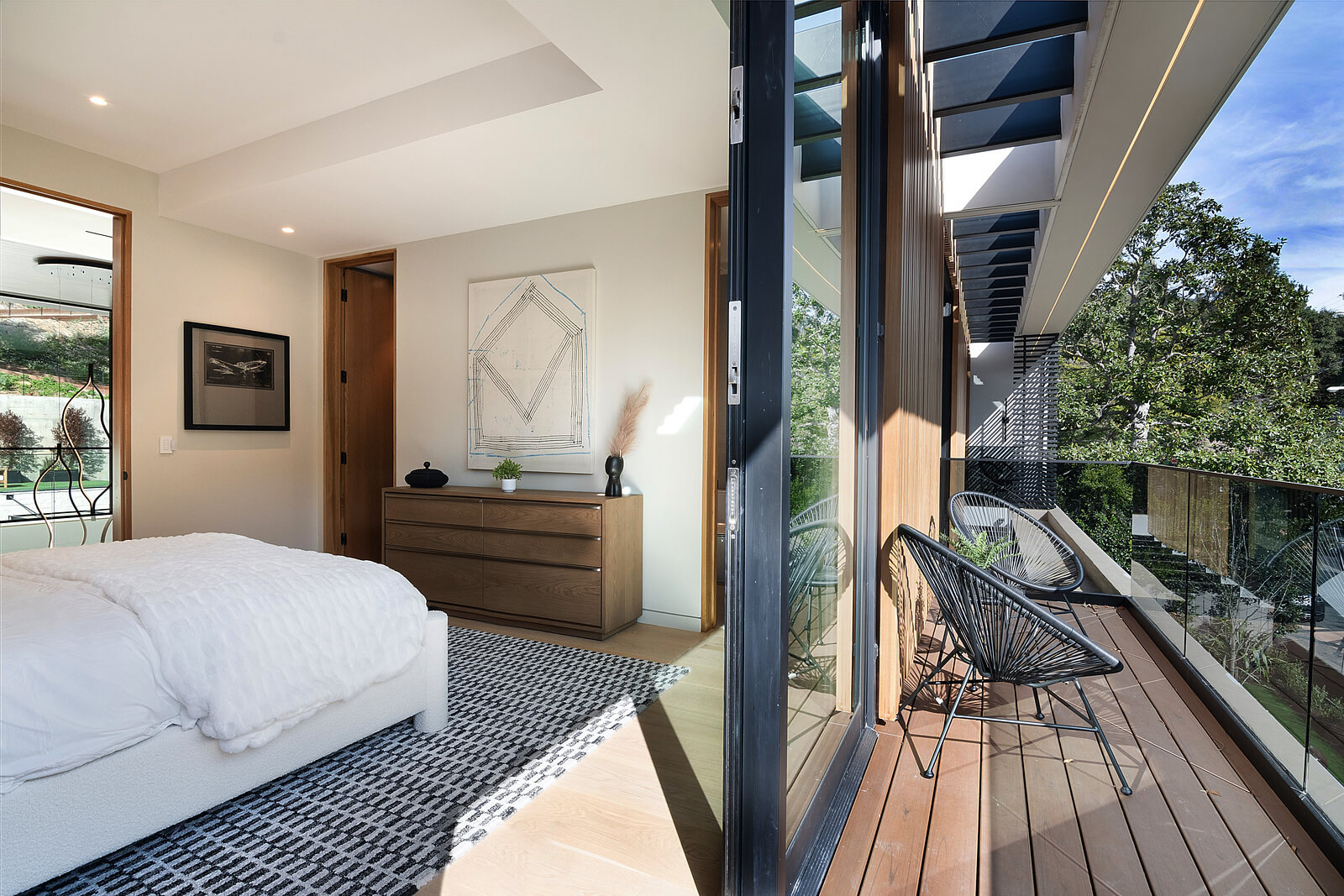
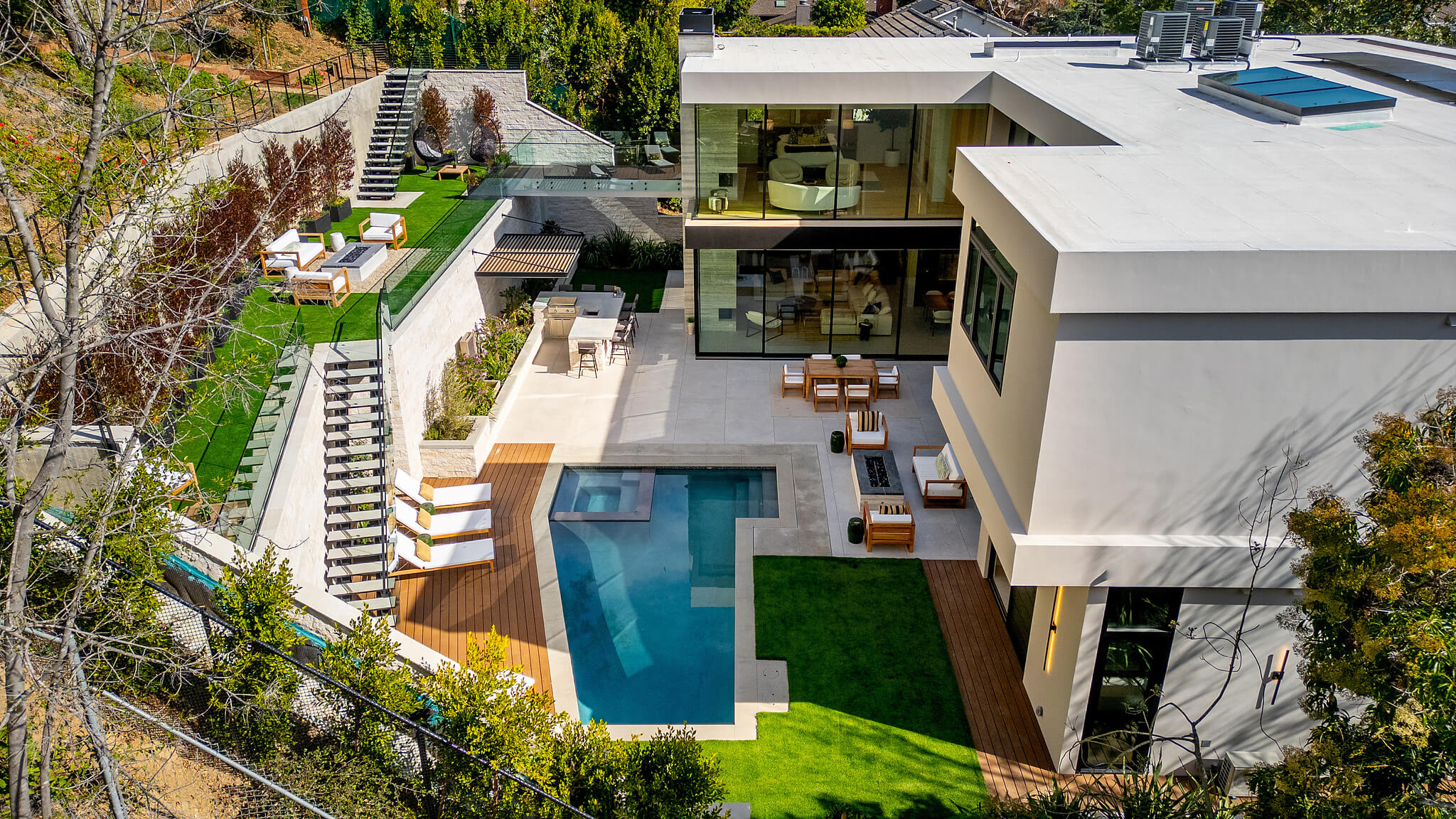
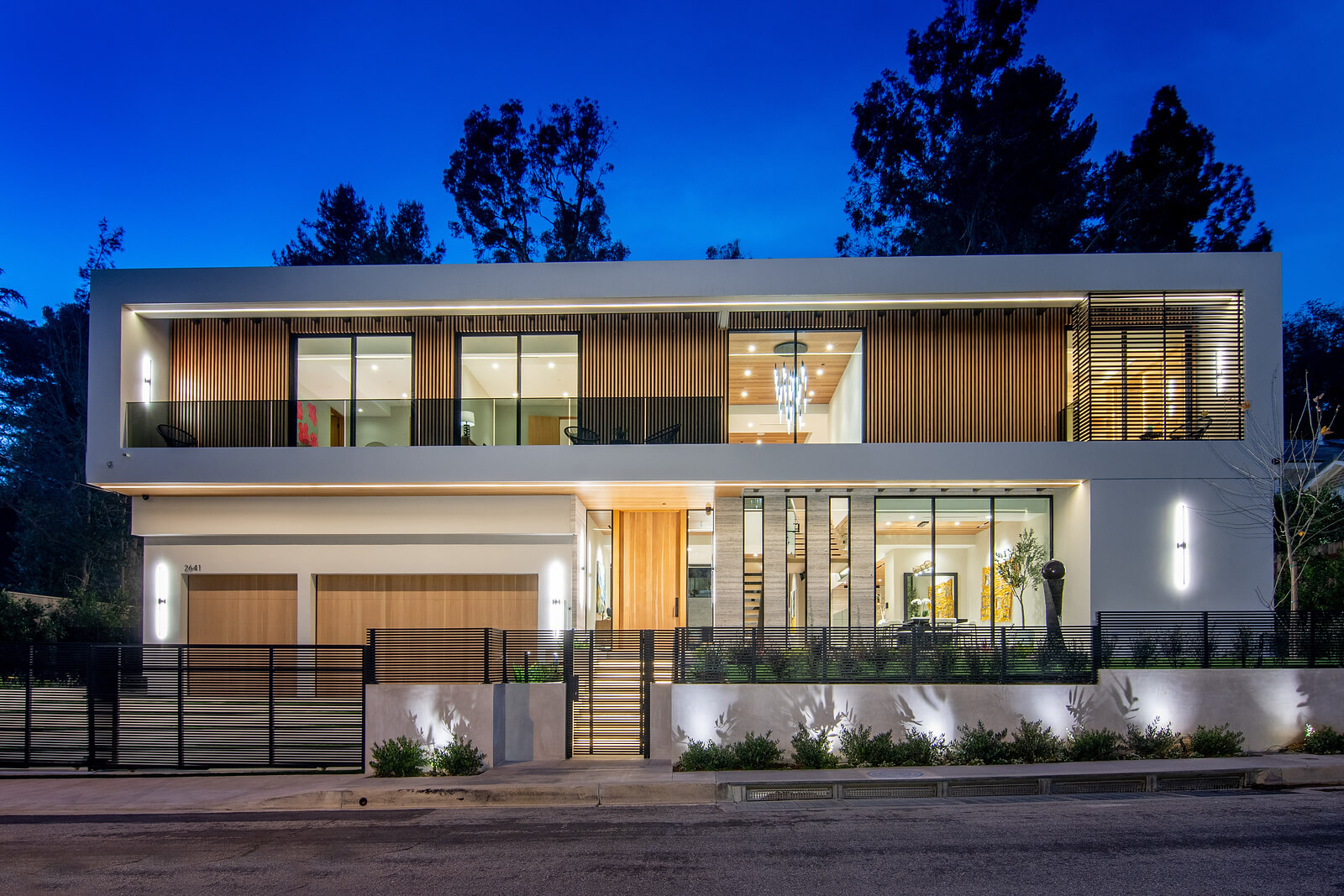
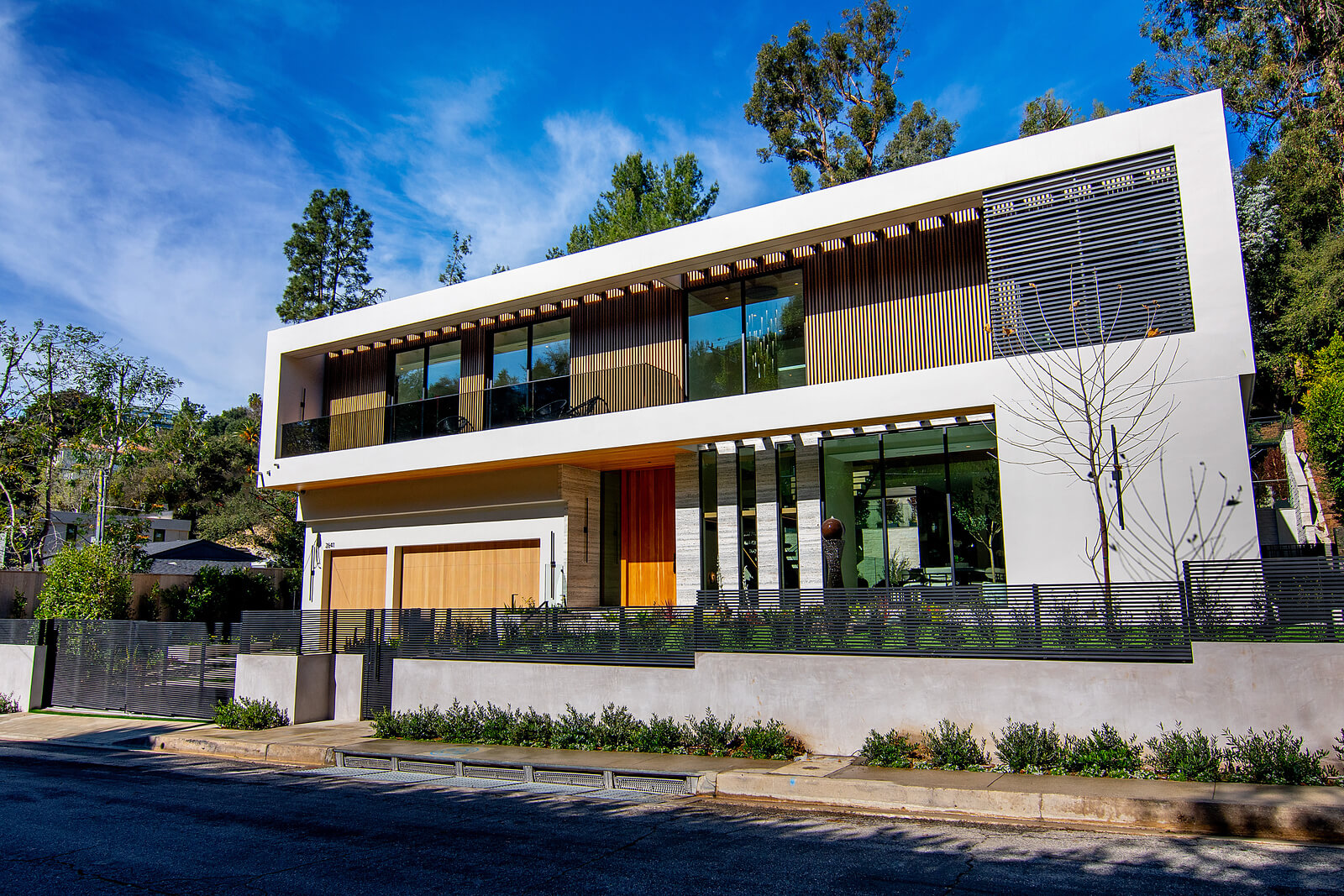
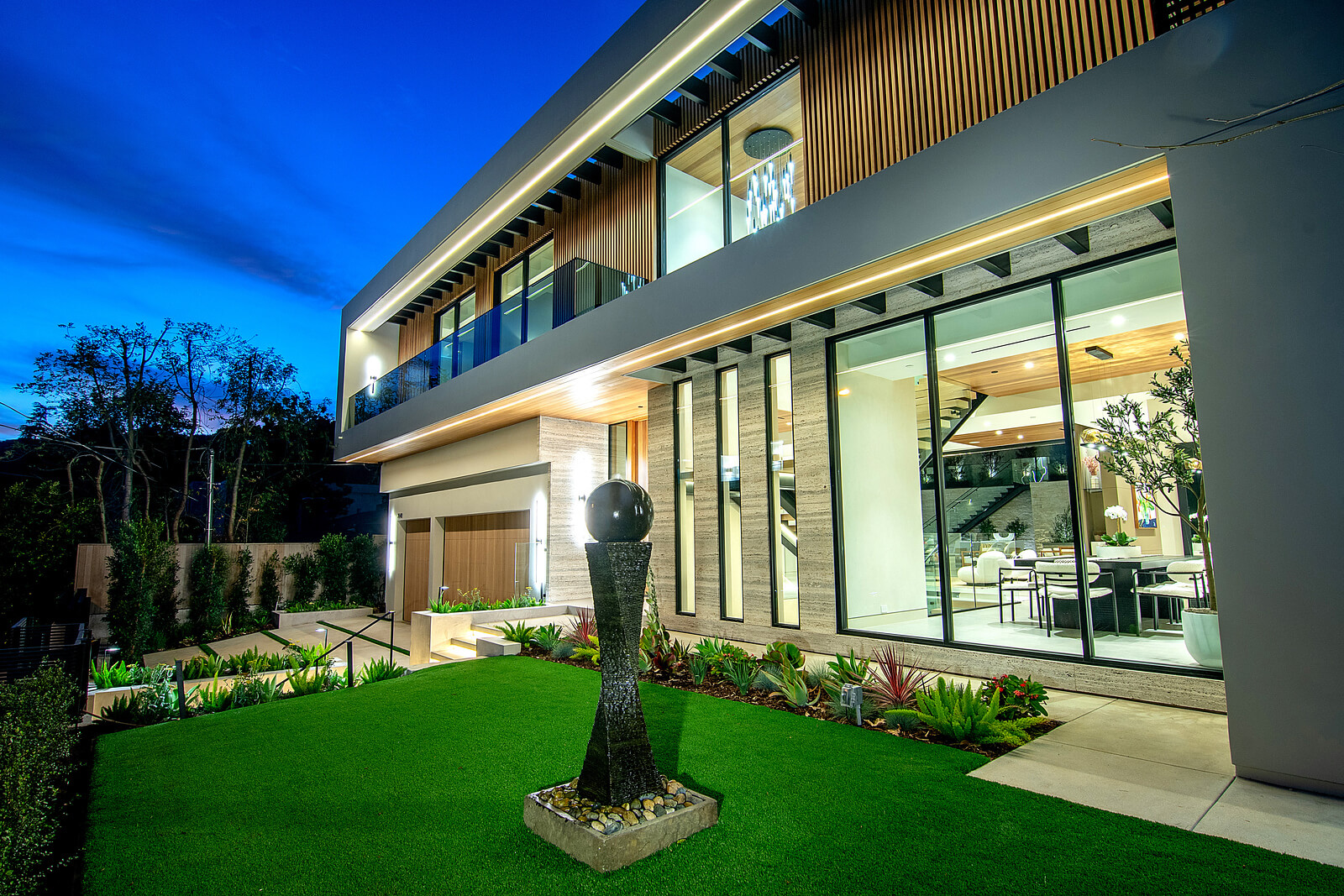
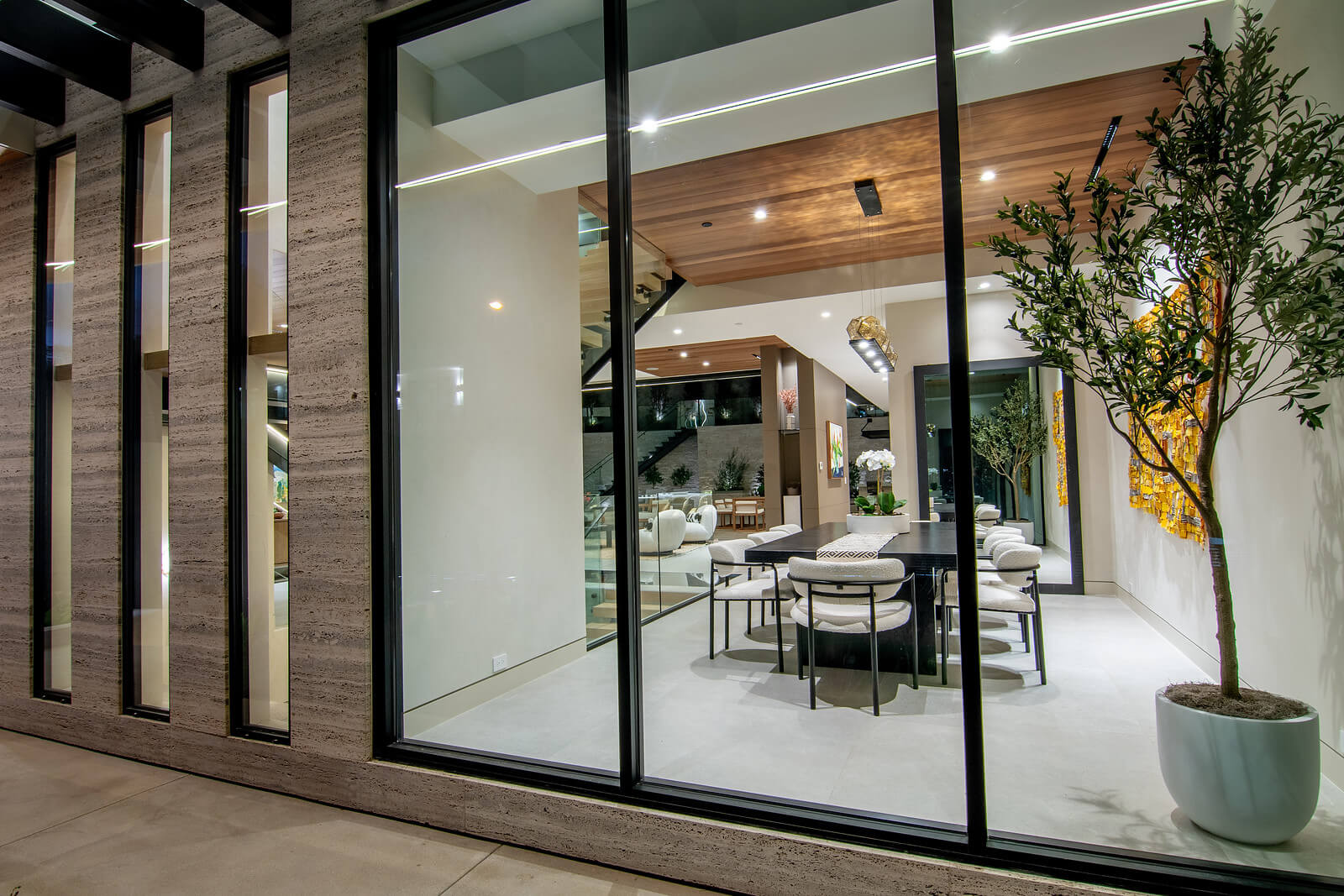
- Natural Light & Transparency: Floor-to-ceiling windows invite daylight deep into the home, framing views of nature and enhancing spatial depth.
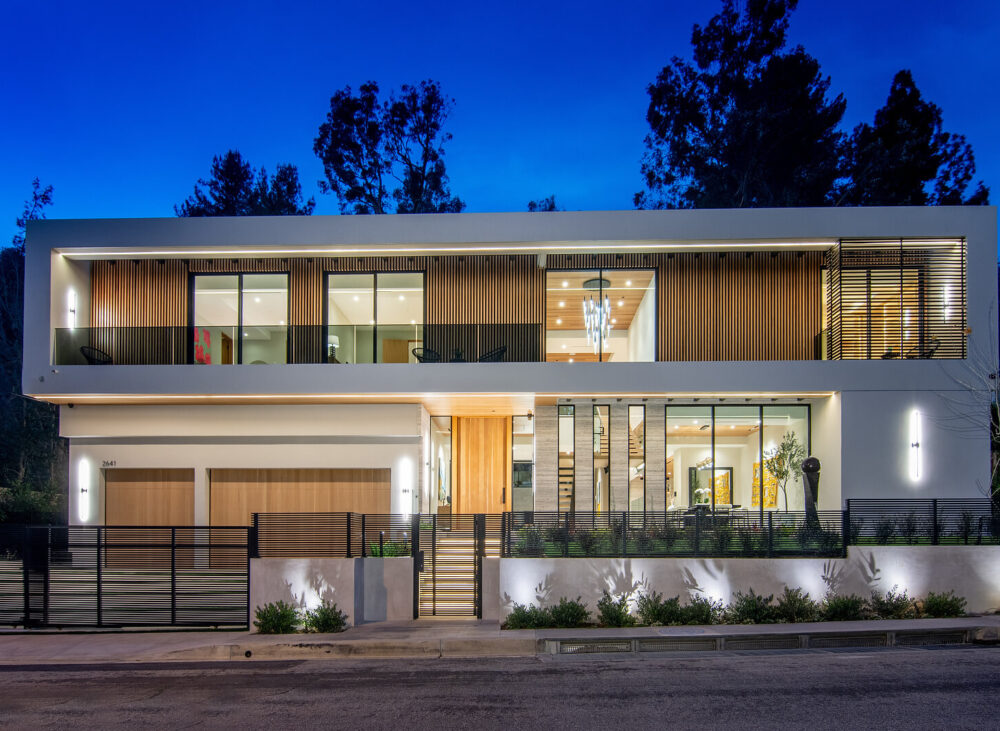
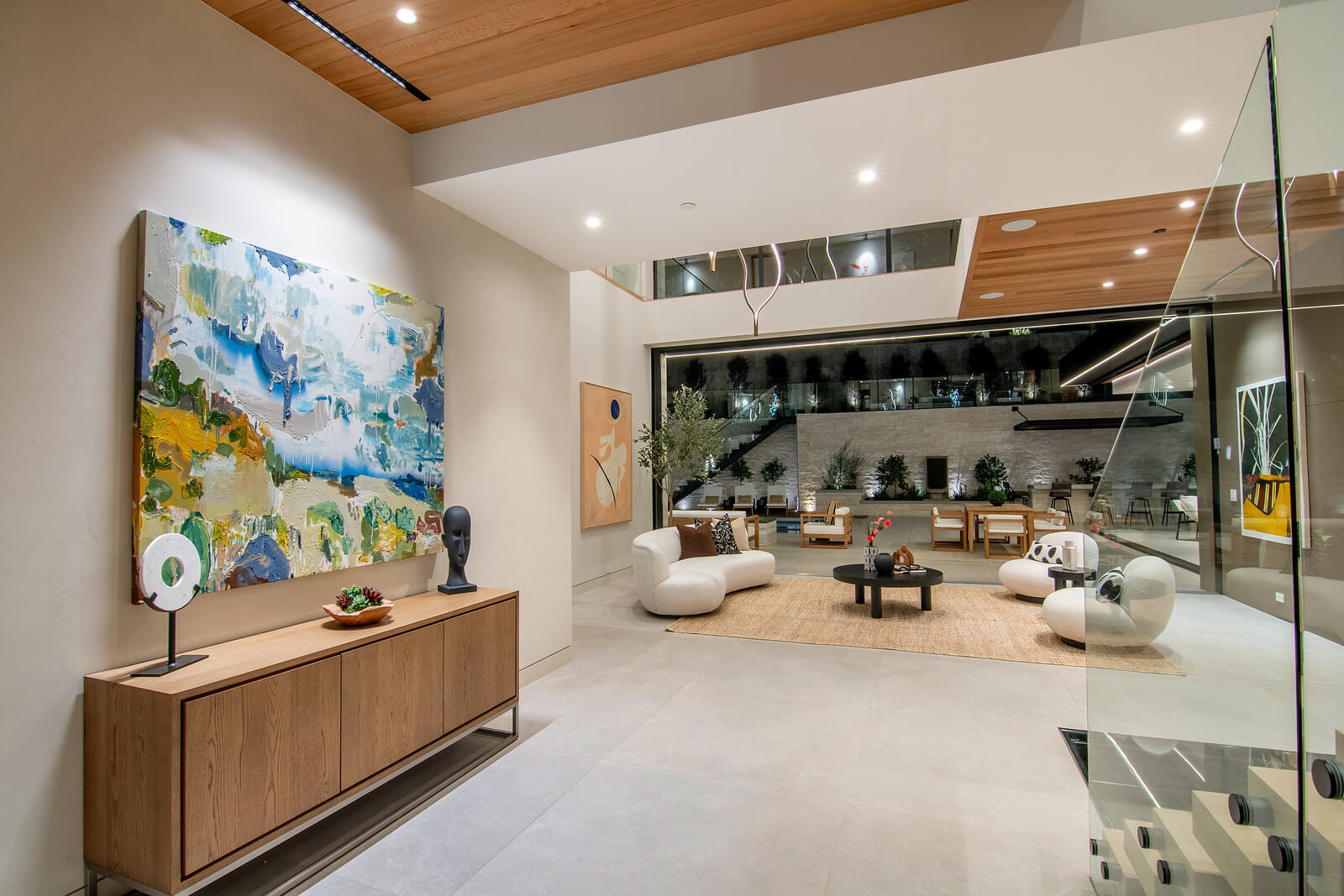
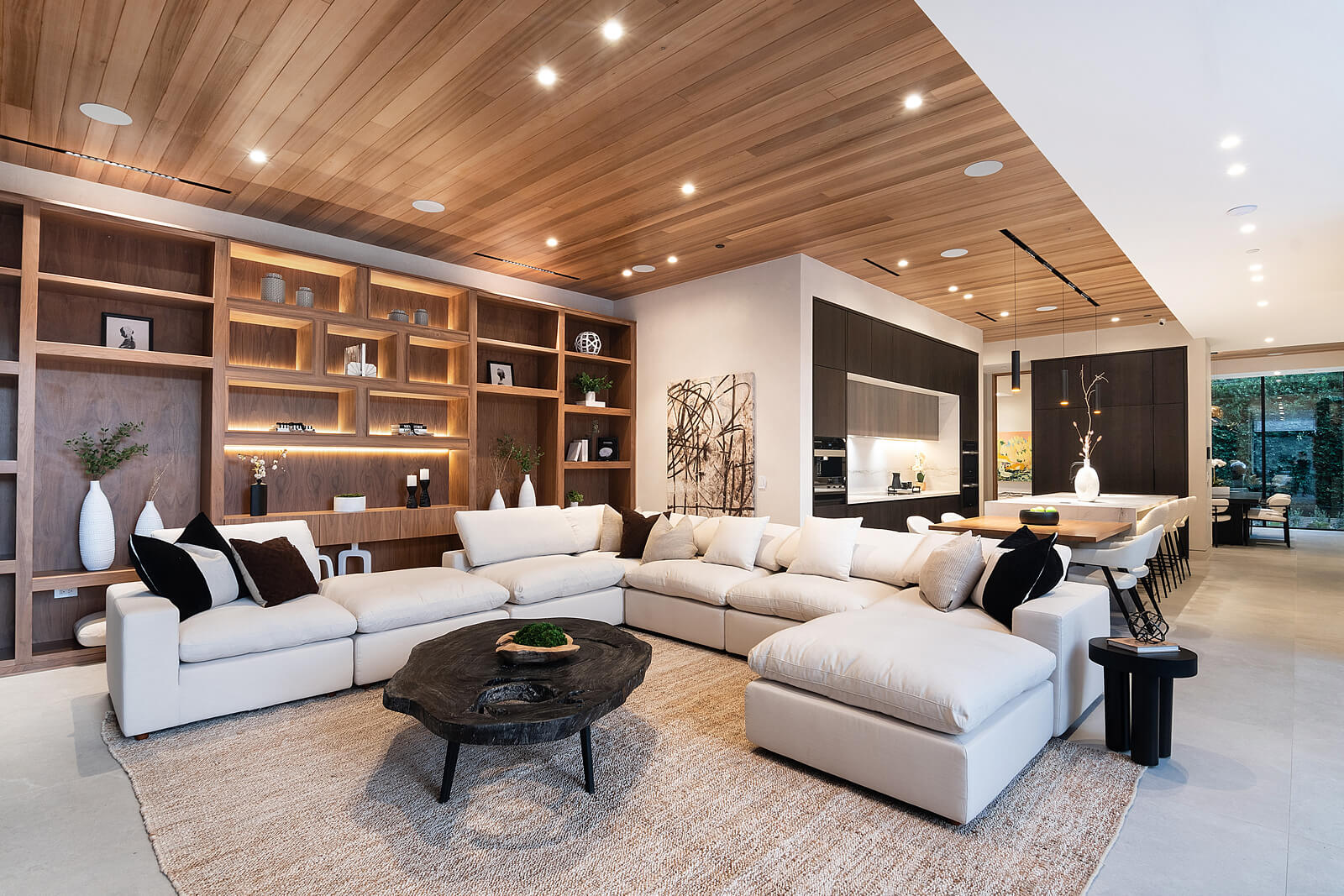
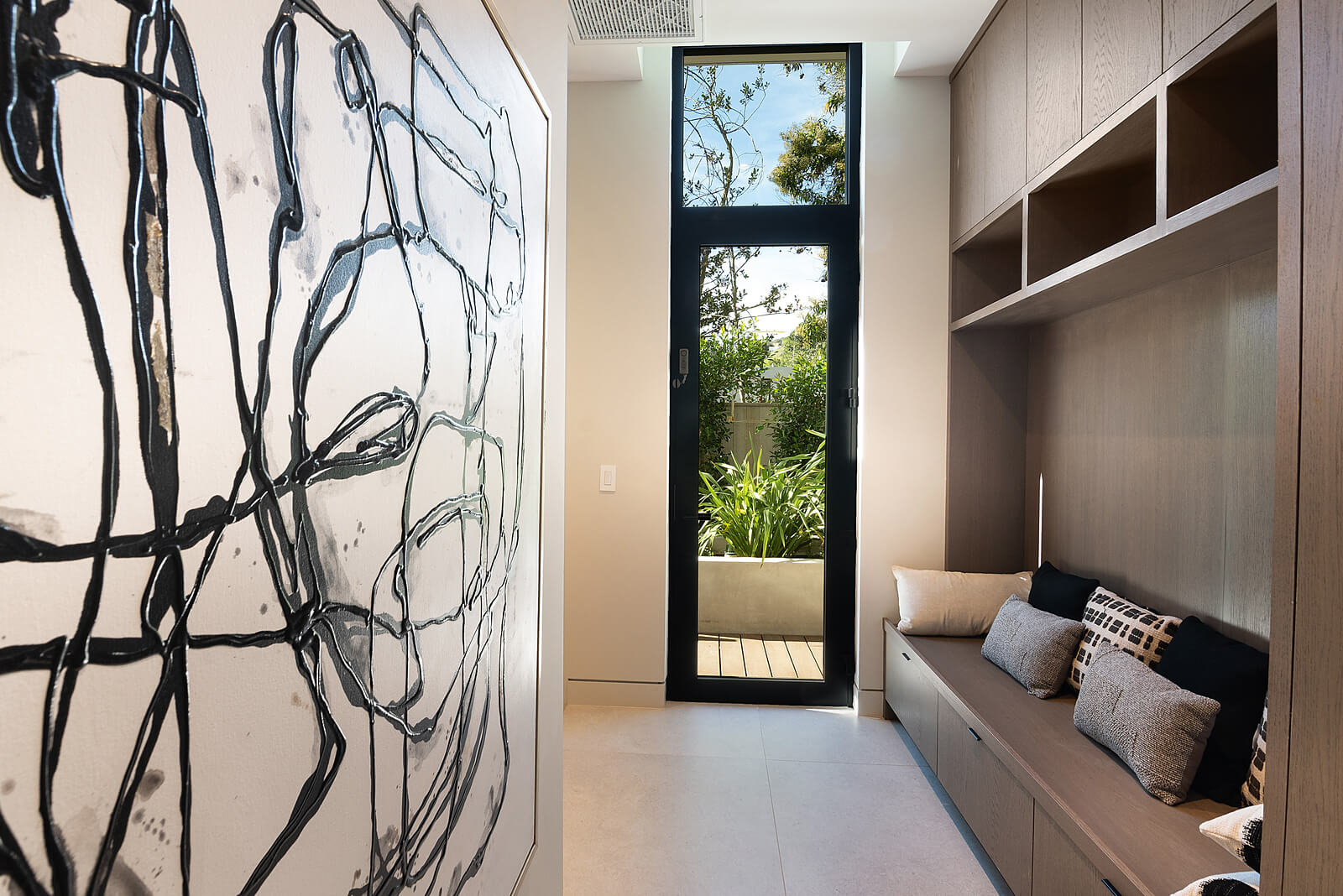
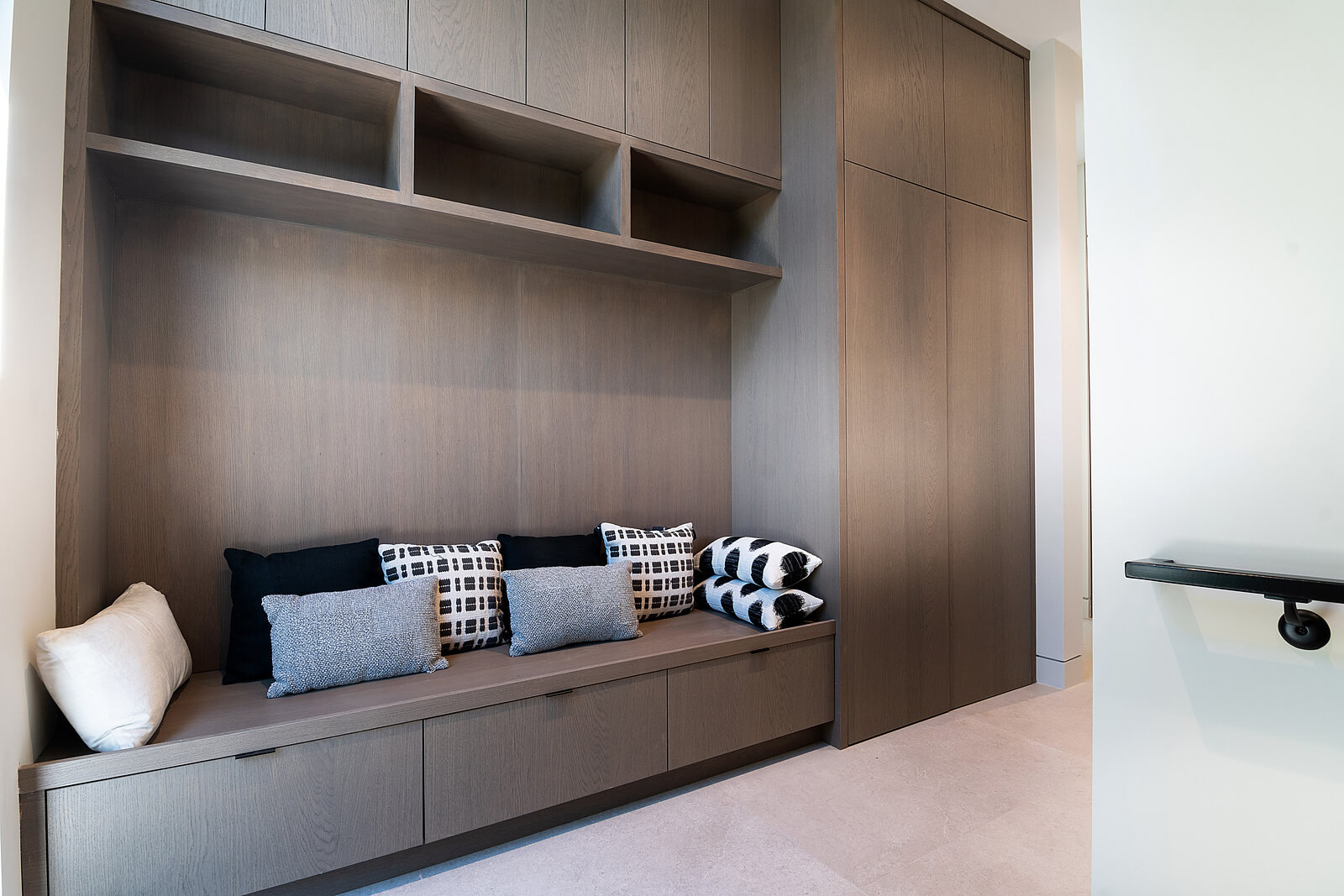
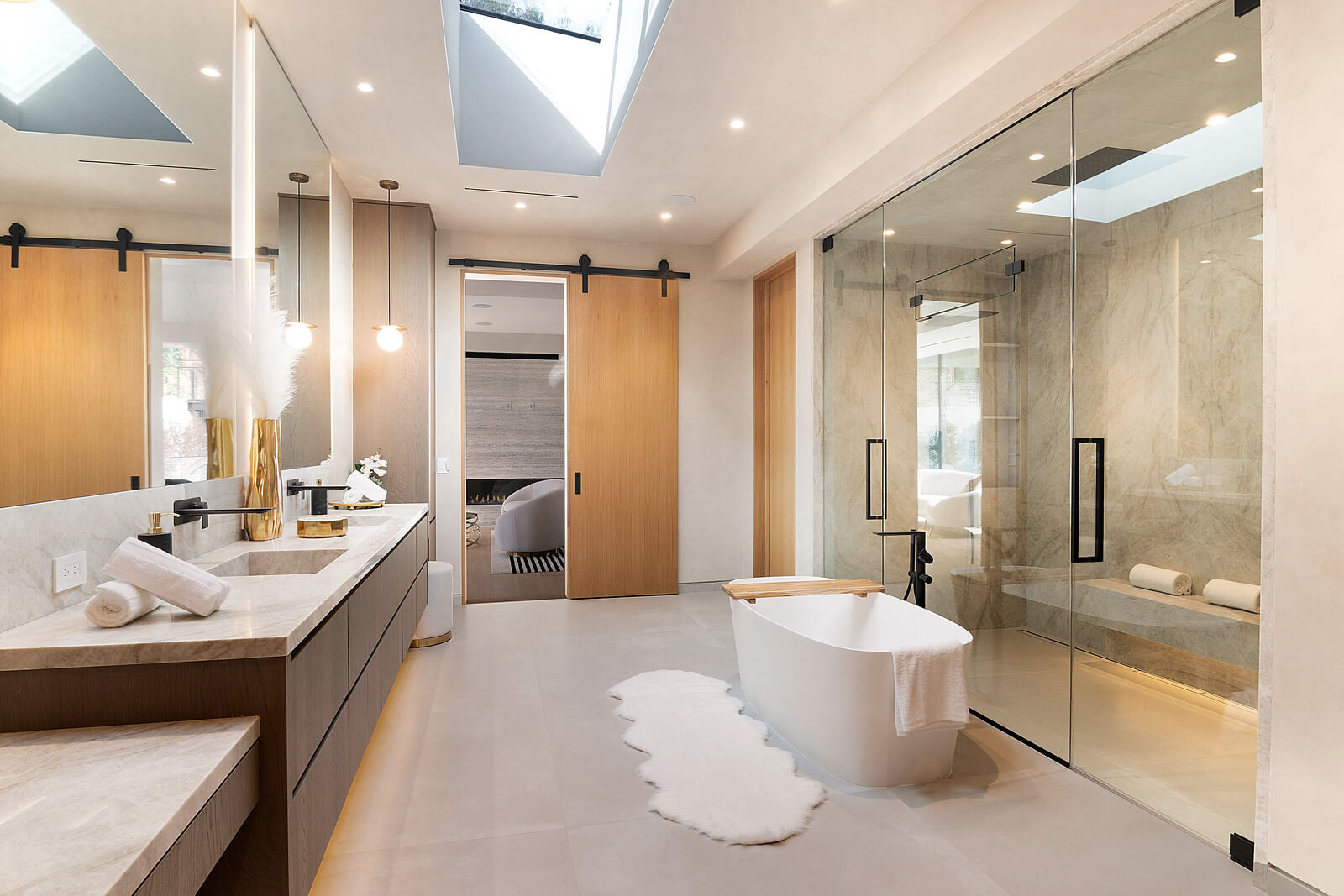
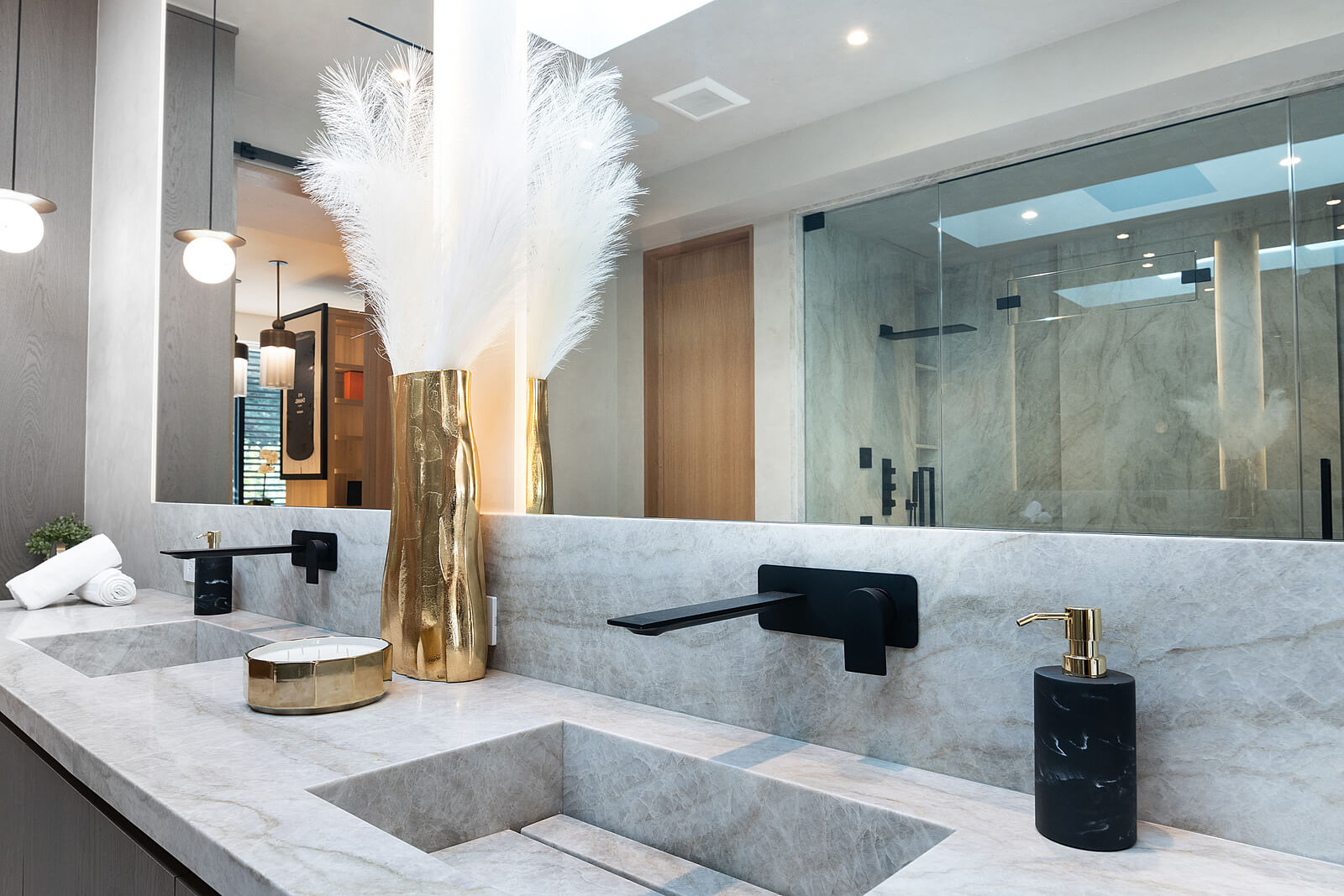
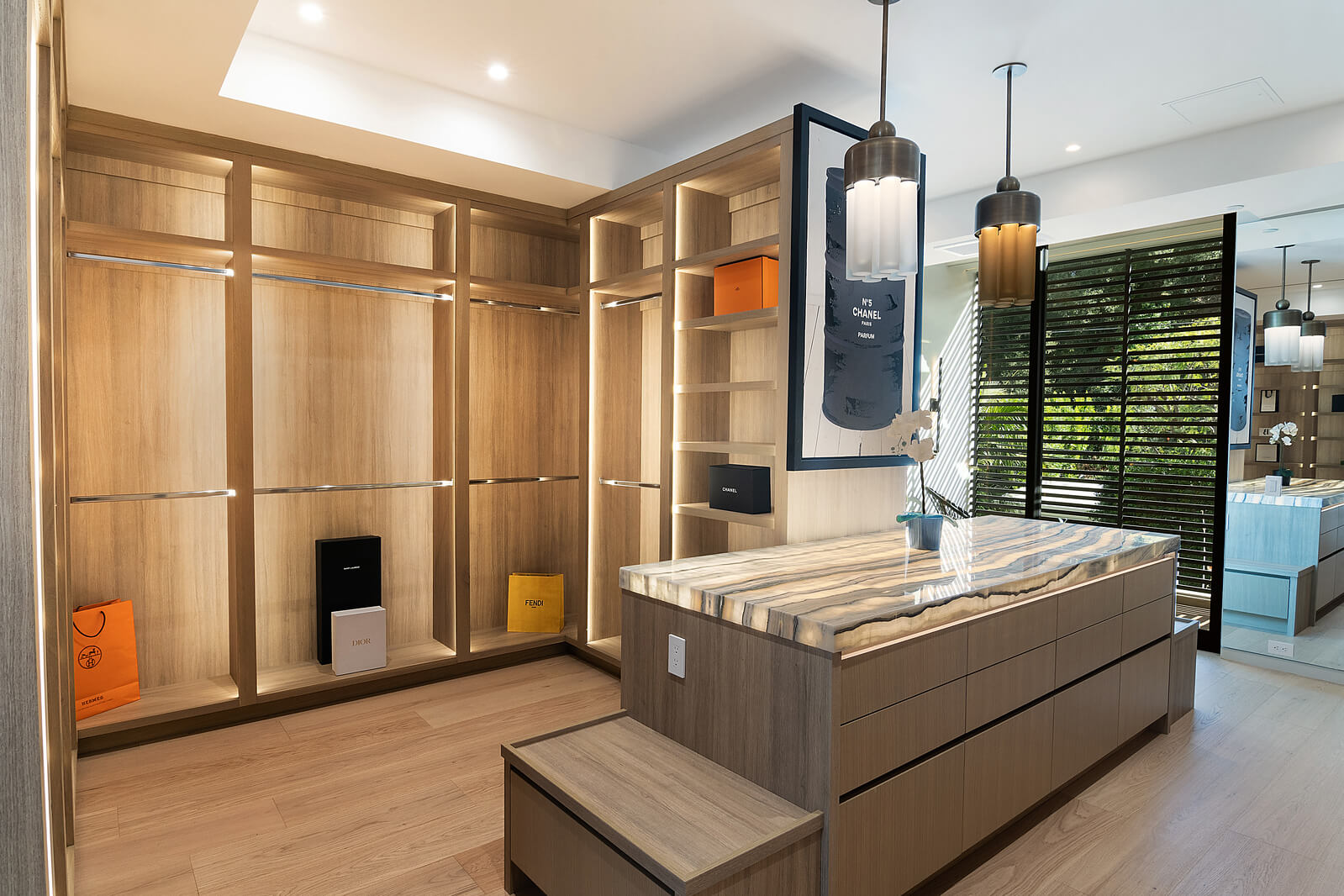
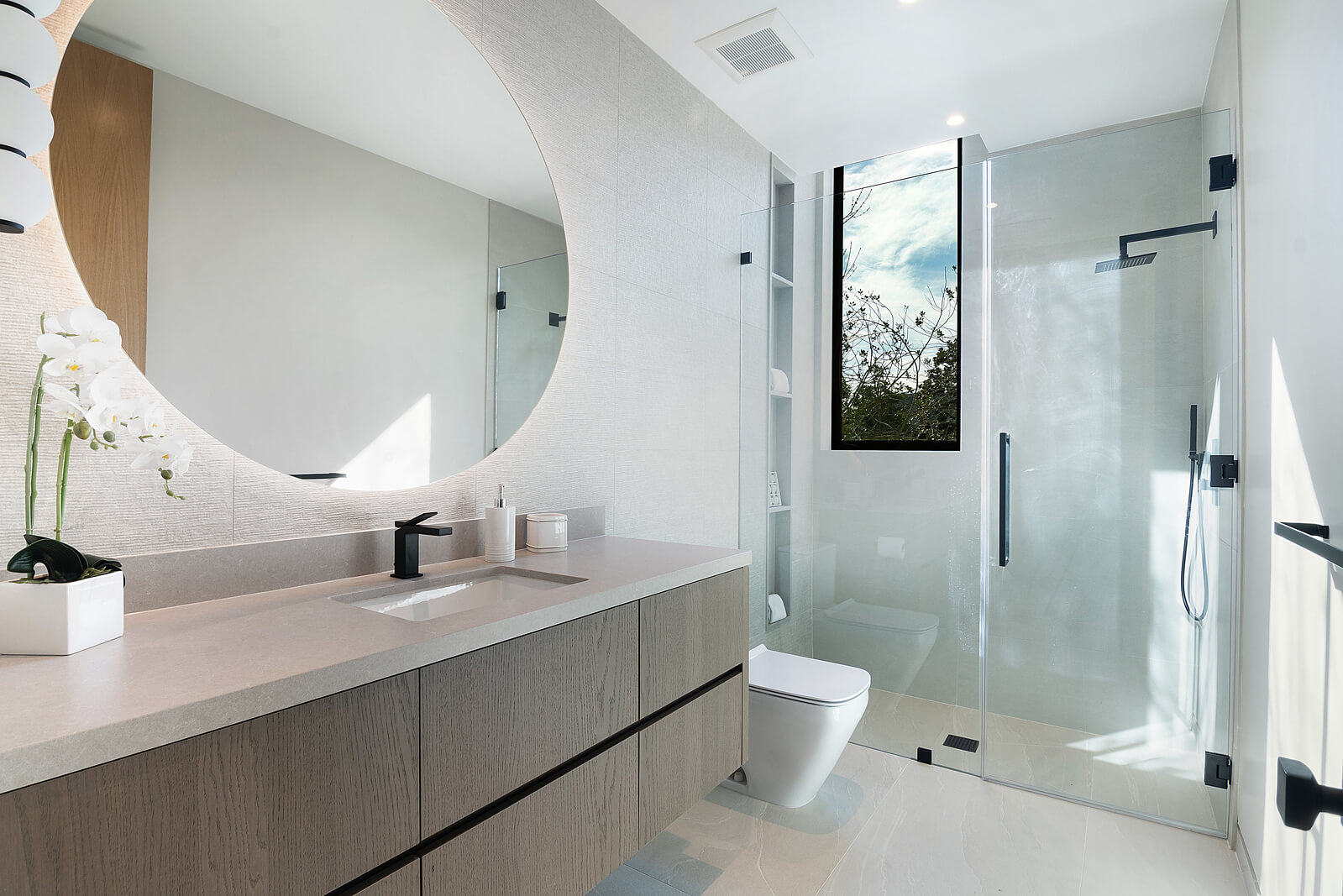
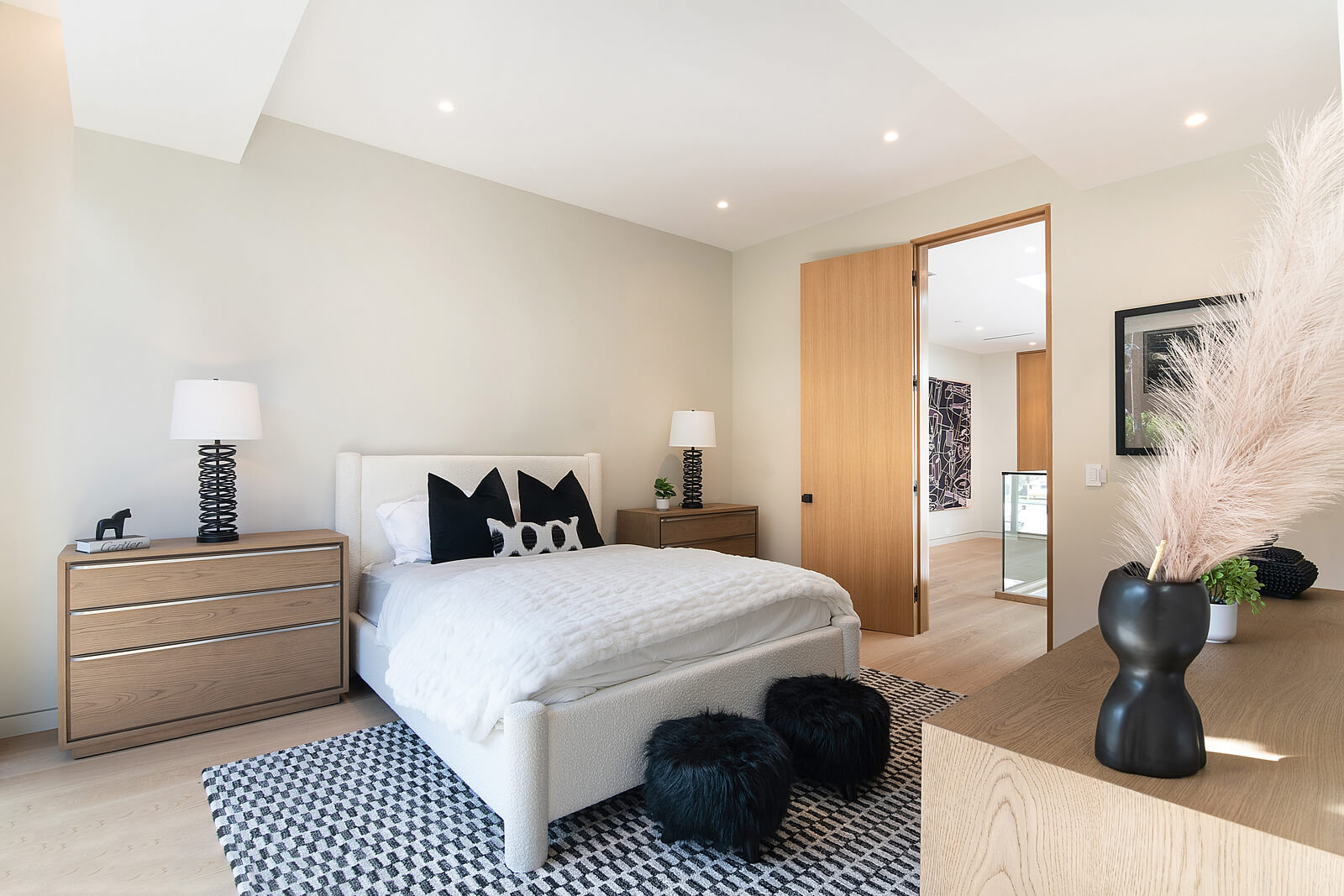
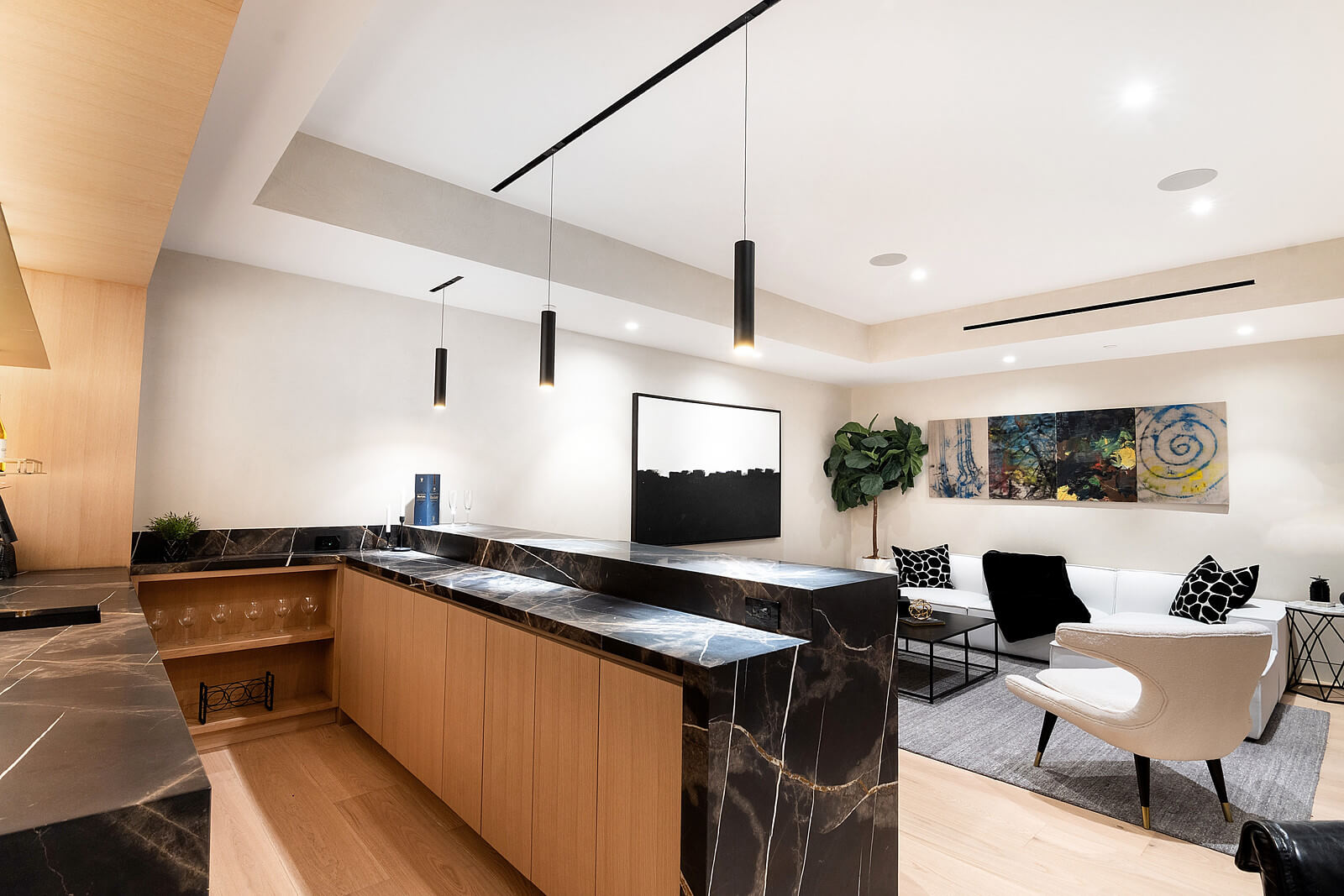
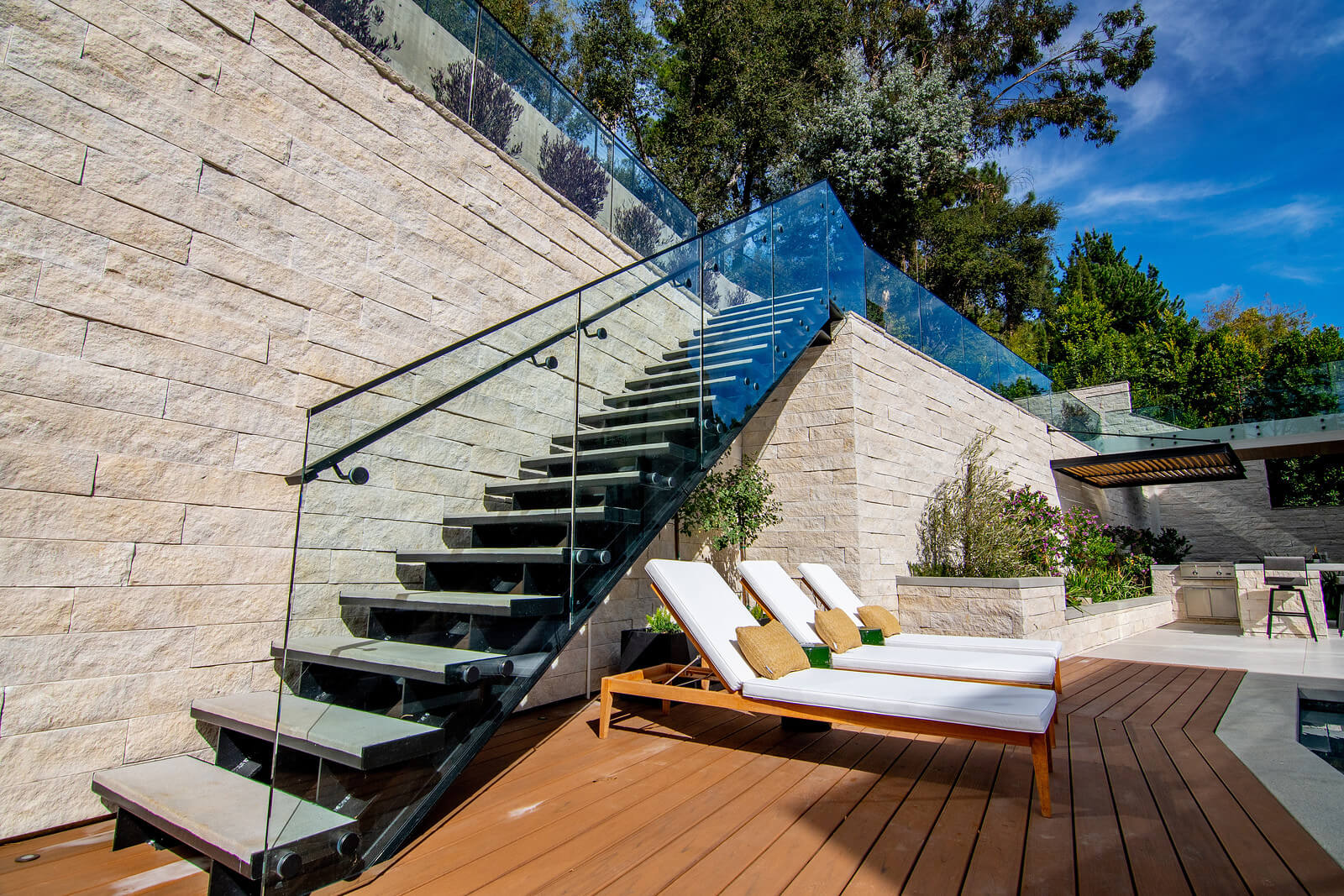
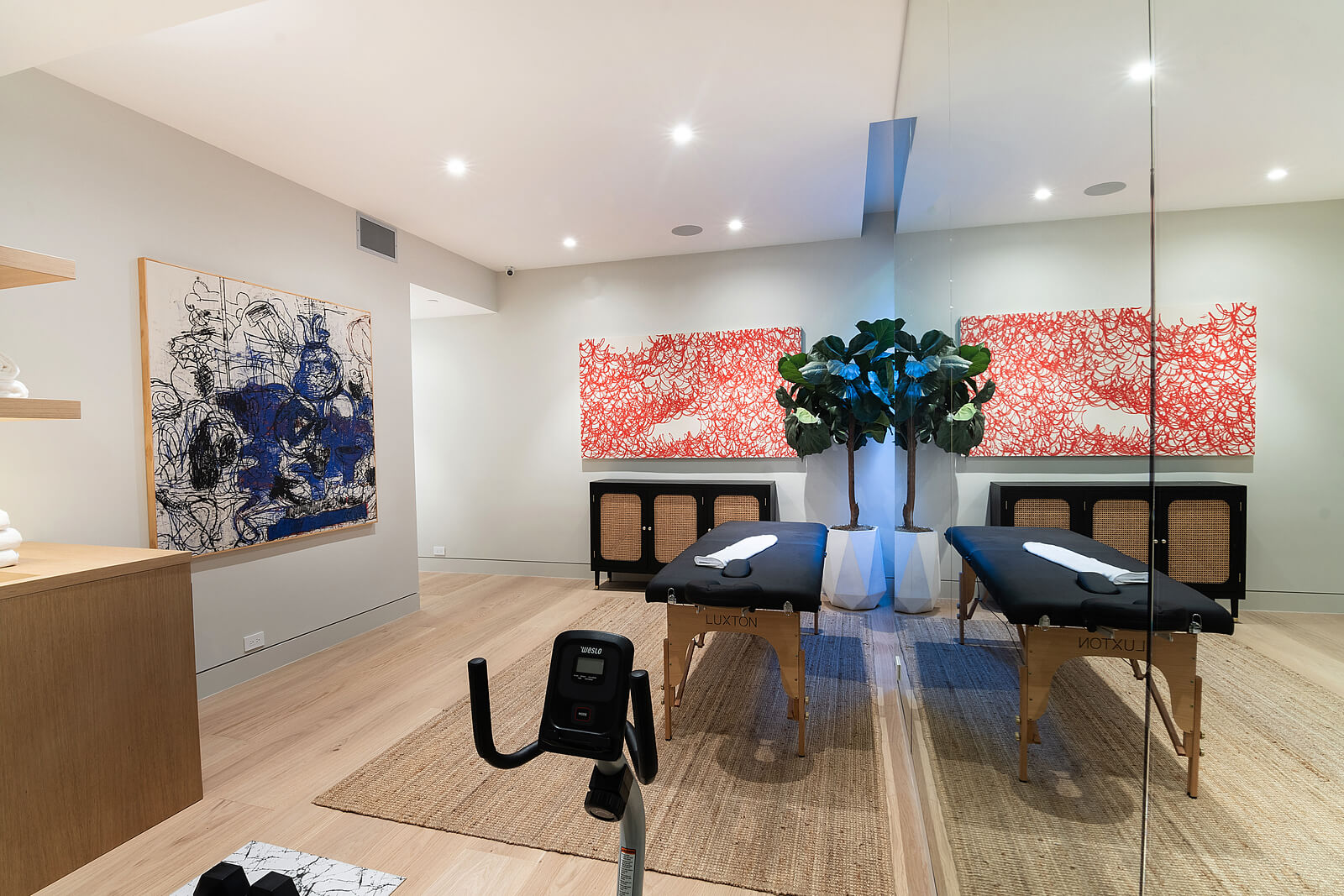
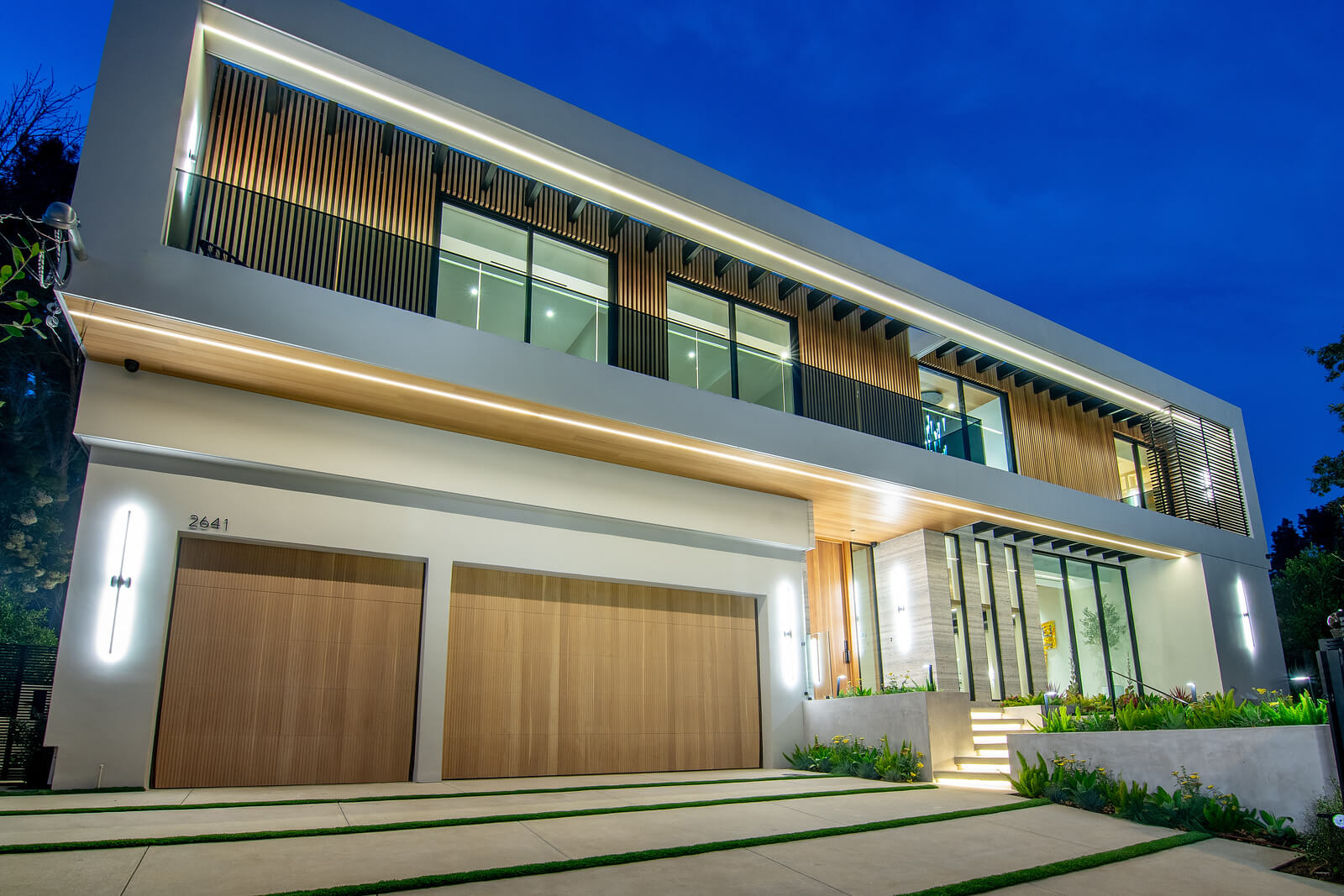
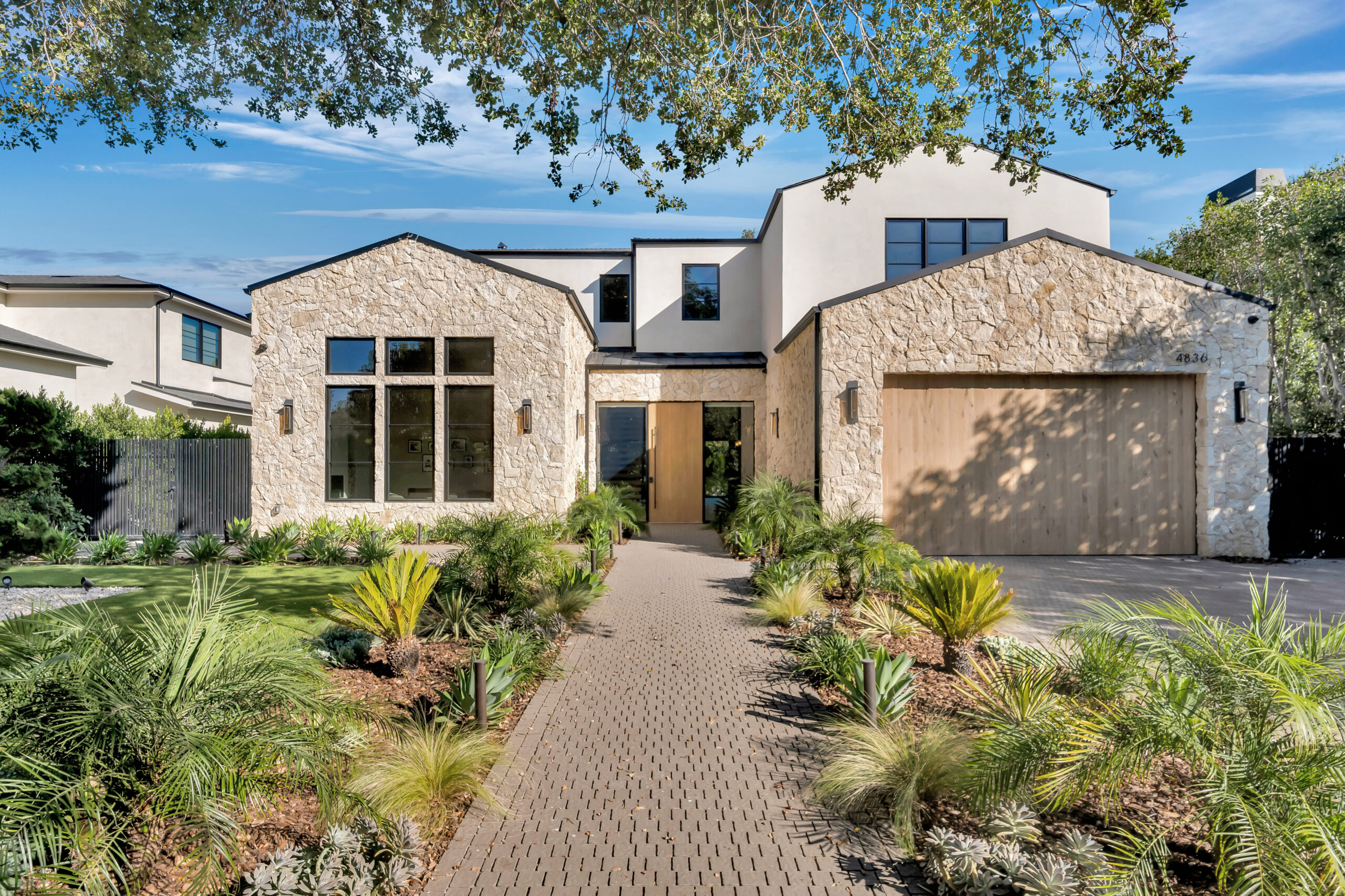
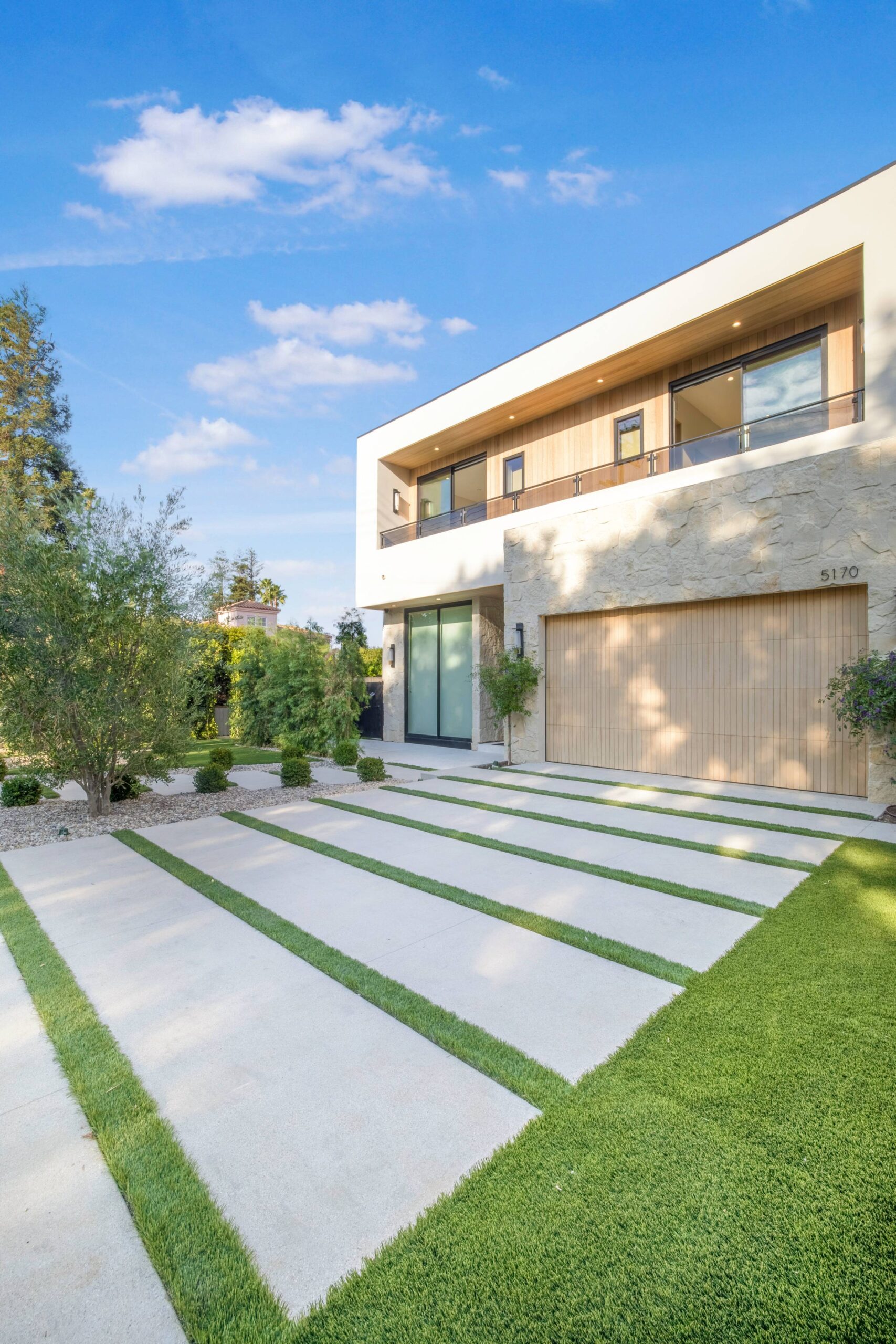
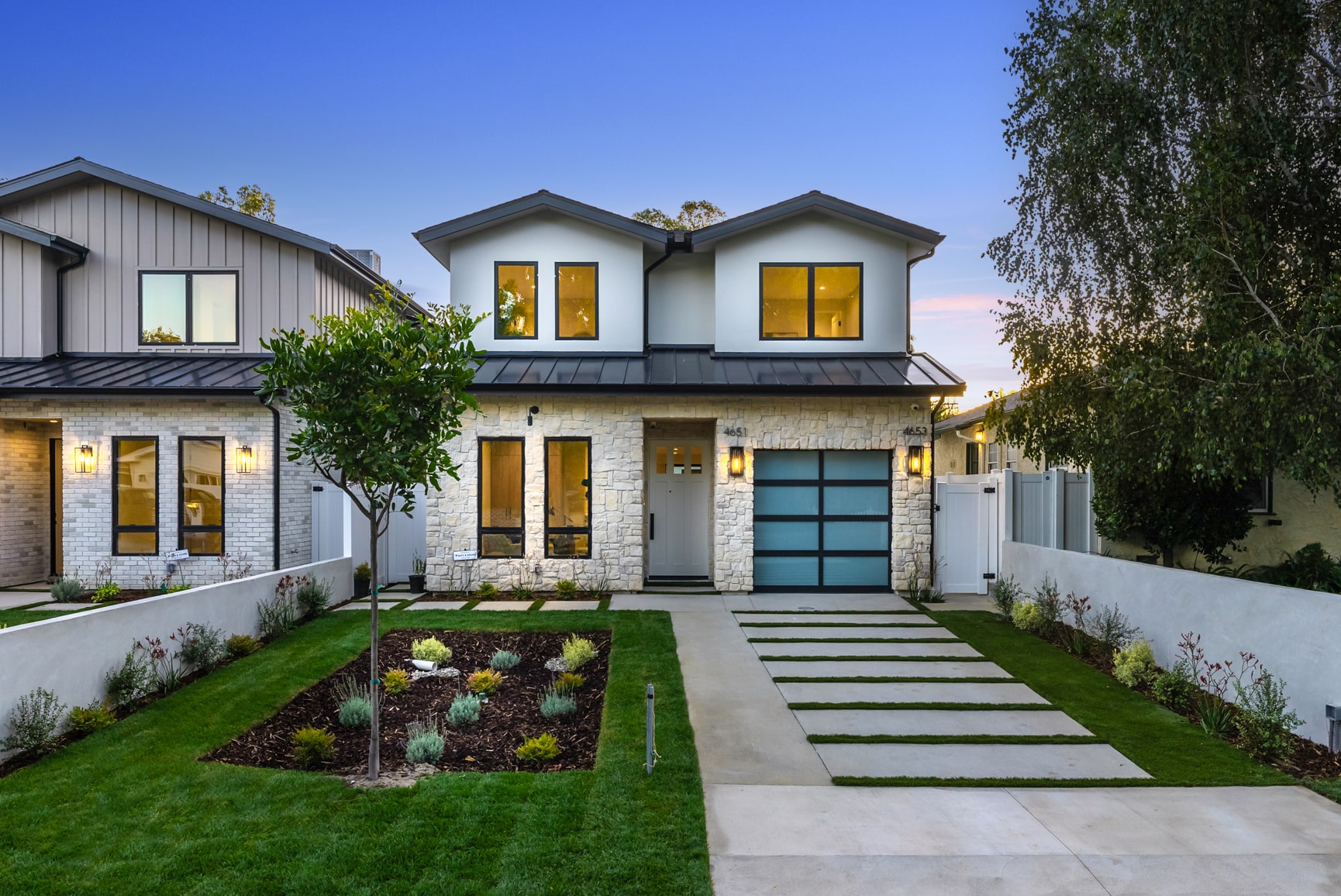
- Material Harmony: Warm wood tones, glass partitions, and neutral stone finishes evoke calm and timeless elegance.
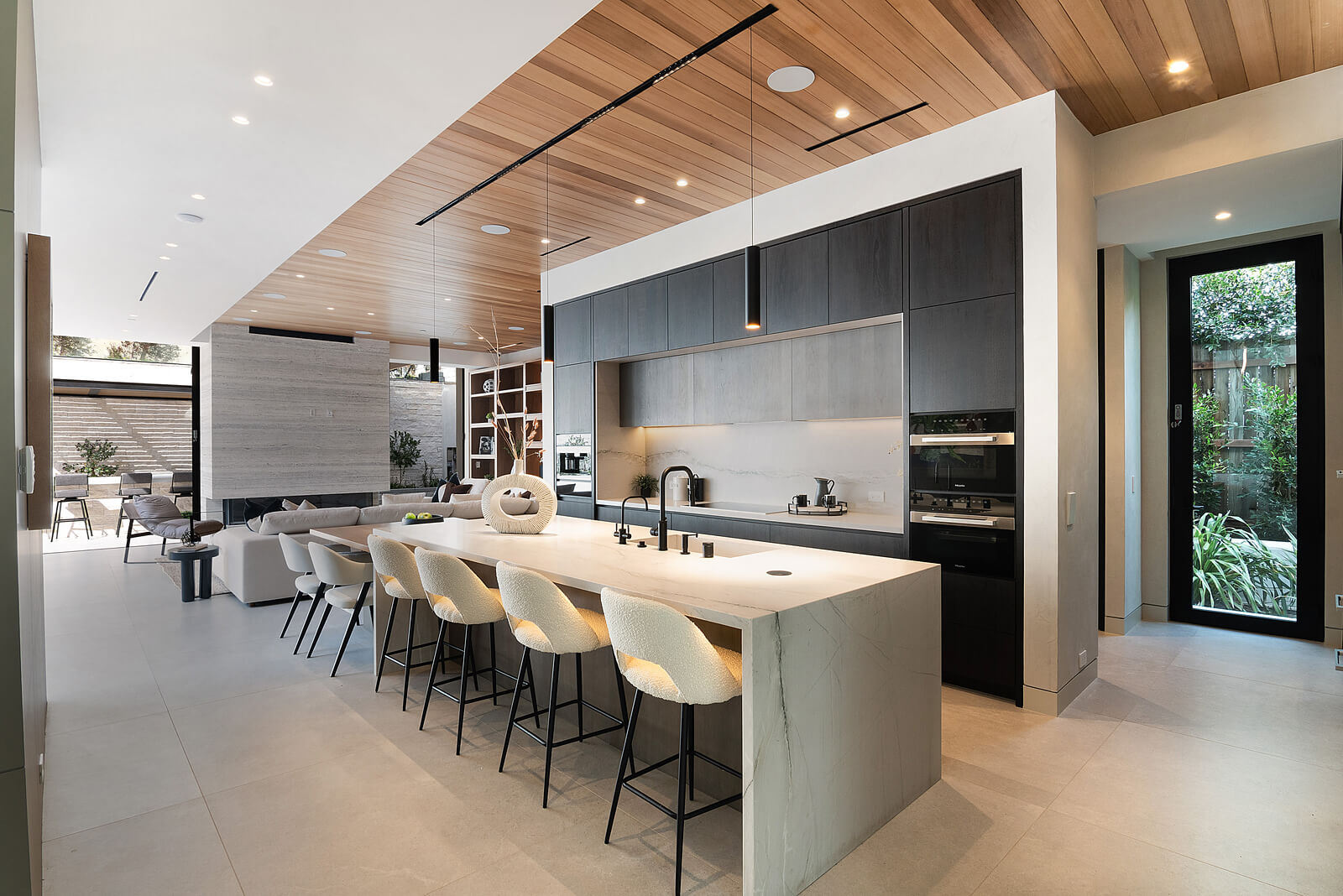
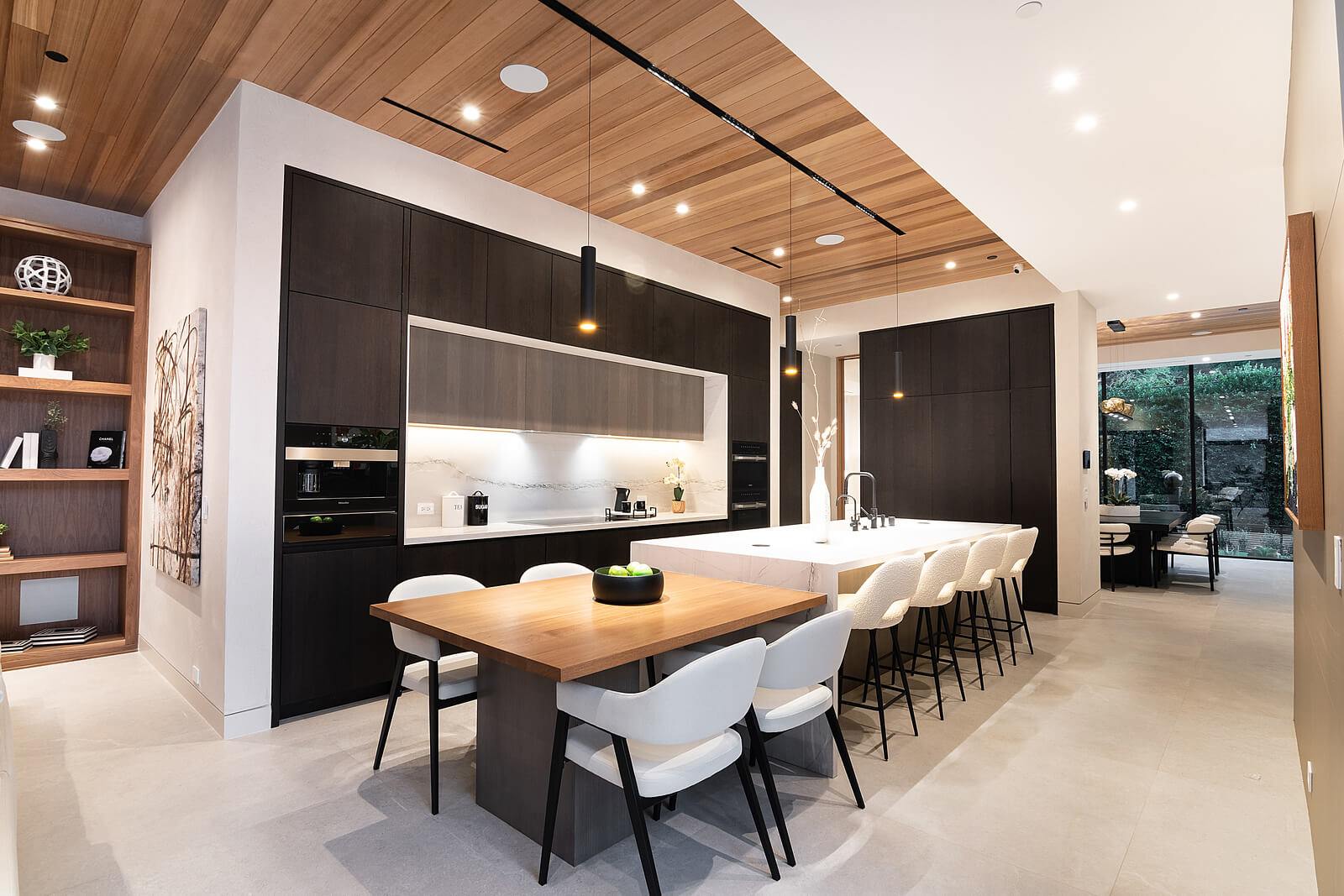
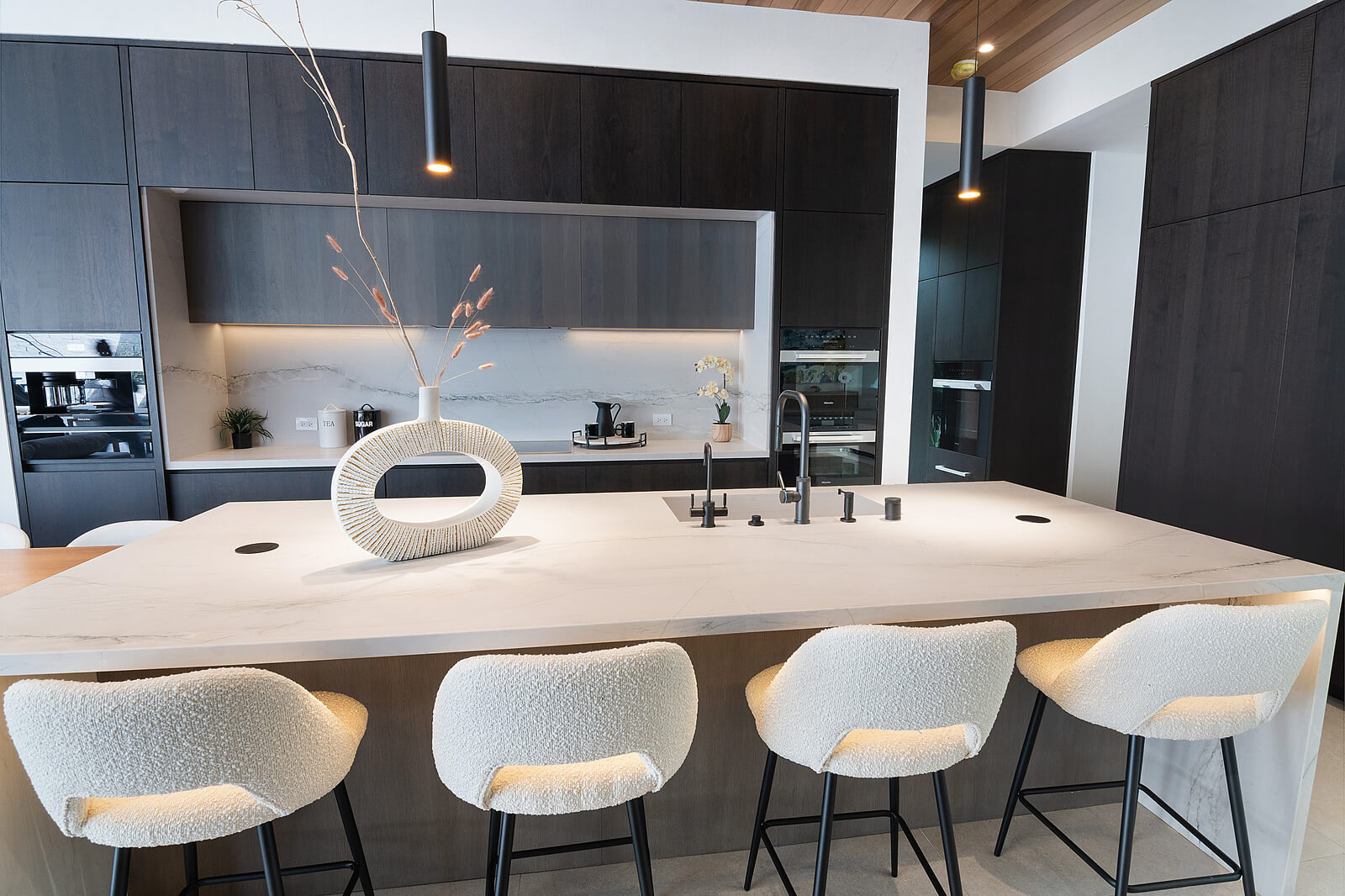
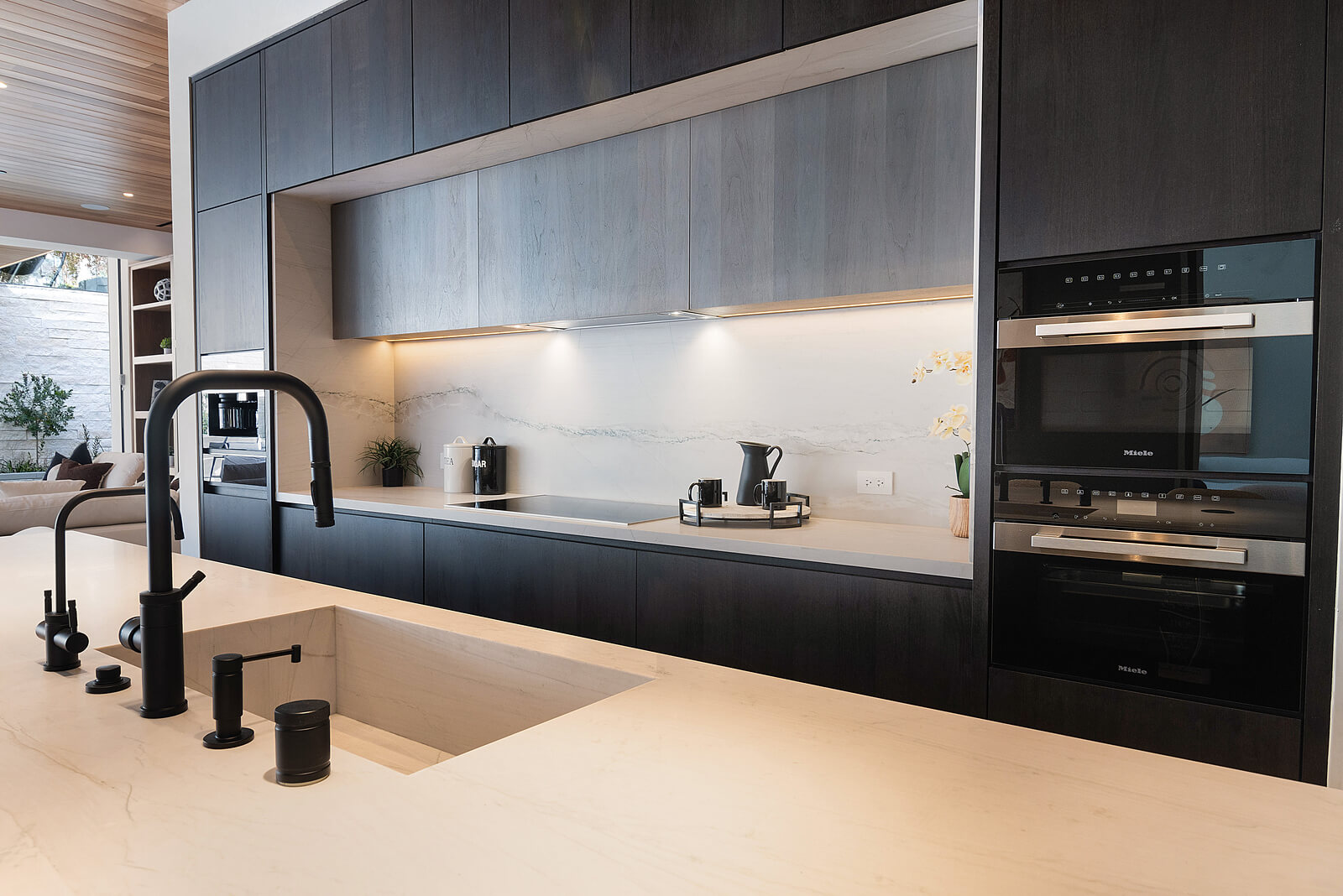
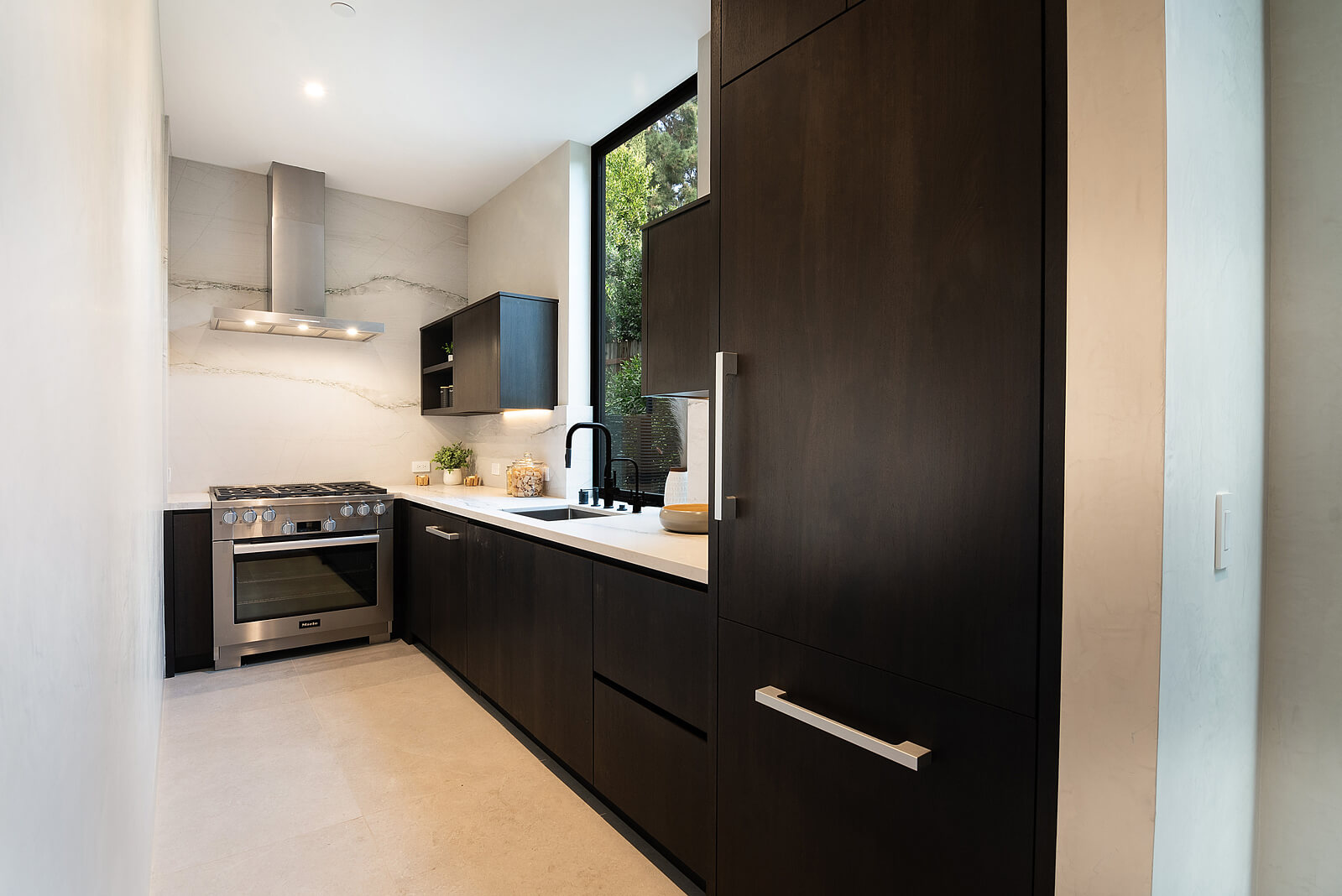
- Functional Kitchen Design:The modern kitchen features a large central island, sleek countertops, and integrated appliances — combining functionality with refined simplicity.
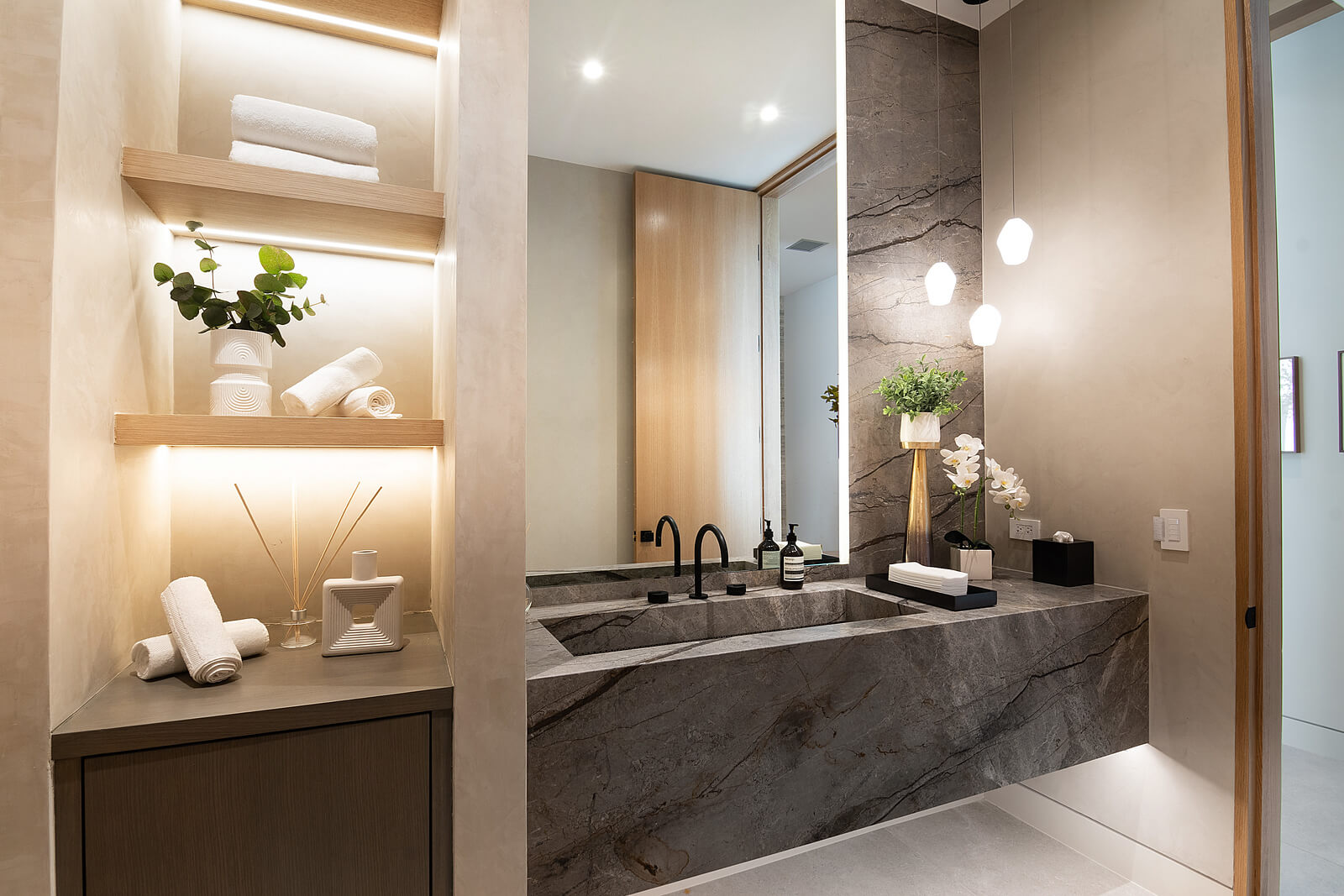
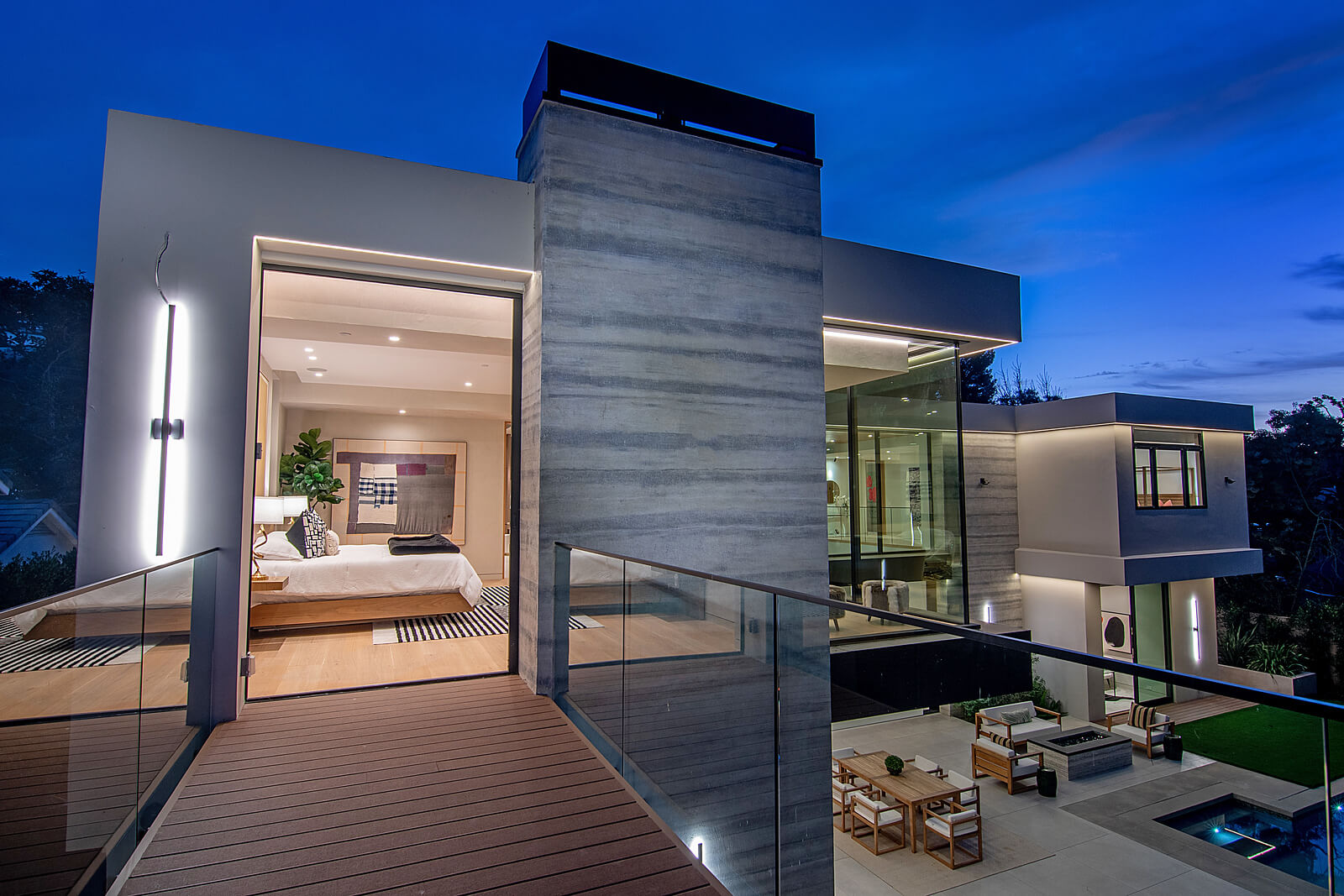
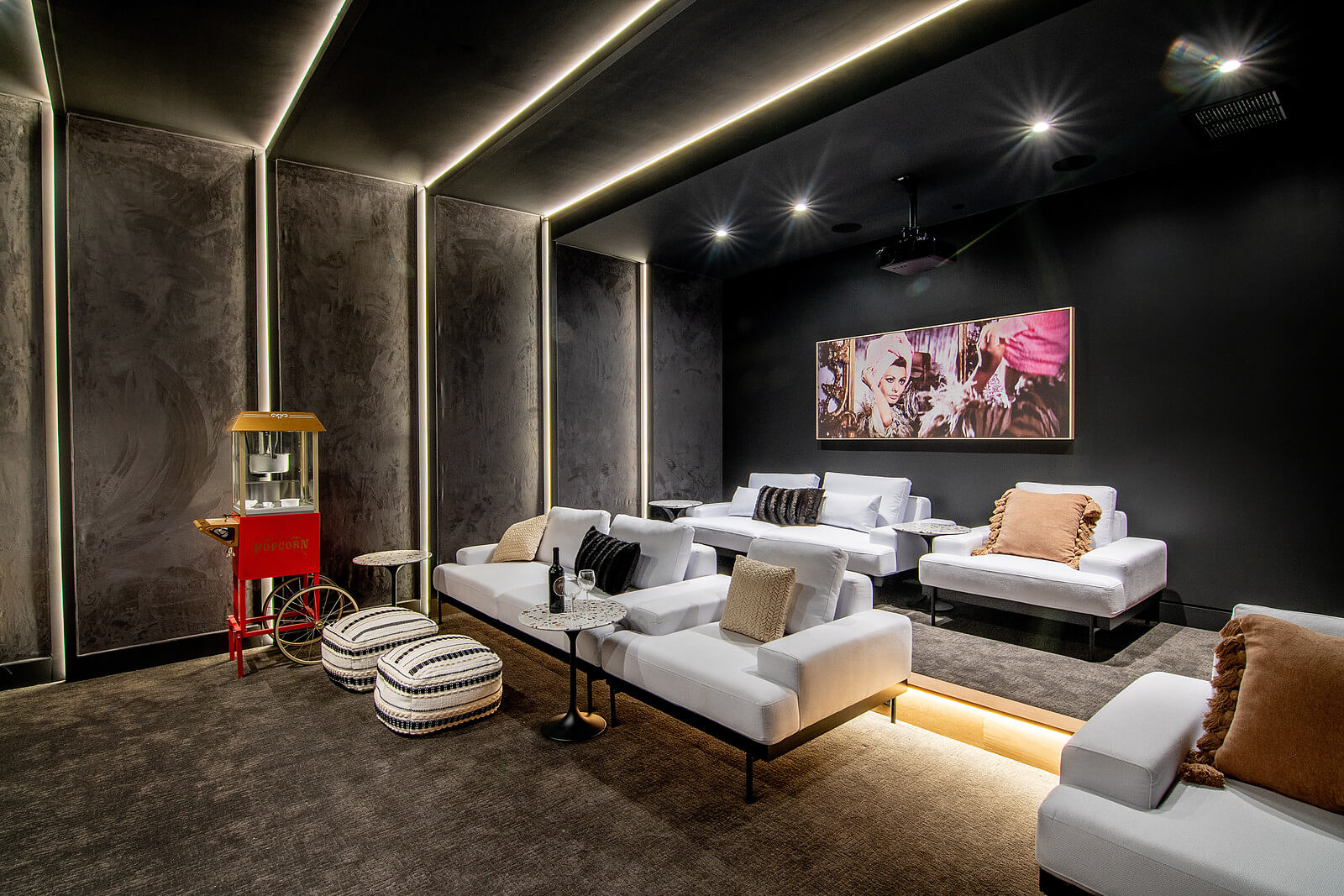
- Modern Refinement: Minimal detailing and integrated lighting emphasize precision craftsmanship and contemporary luxury.